Wildebeest migration safari Kenya : The great wildebeest migration is among the natural wonders of the world and it can be seen during a safari in Kenya.
Masai Mara national reserve located in the south western part of Kenya is a destination where the great wildebeest migration can be seen during a tour as over 2 million wildebeests graze around the savannah plains.
Apart from Masai Mara national reserve, the wildebeest migration can be seen in Serengeti national park in the northern part of Tanzania where most of the migration takes place during the year.
Masai Mara national reserve and Serengeti national park share an ecosystem and safaris to the two destinations are compared by travelers. Tours can be carried out to both destinations during wildlife viewing experiences.
Some of the factors which influence the movement of the wildebeests include weather among others. The wildebeests tend to follow the rainfall during their movement through the year and the wildebeests are also said to move in search for greener pastures.
During the wildebeest migration in Kenya, apart from the wildebeests, zebras and gazelles can also be seen. This migration follows a clockwise movement every year and can be seen in different locations during the year.
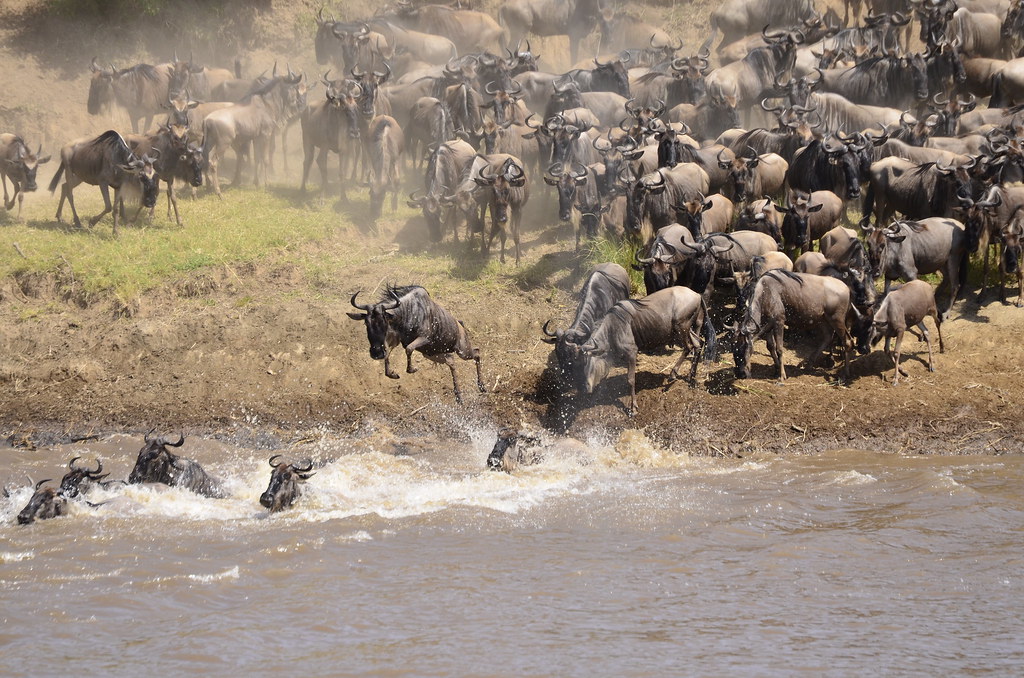
In Kenya, the wildebeest migration can be seen during the months of August and September when the wildebeest herds cross over from the Tanzania side along the Mara river which is a crossing point during the migration.
Around January to March, the wildebeest migration can be seen in the southern plains of Serengeti national park and also around the Ndutu area. This is a time of the year when the calving season takes place as over 8000 wildebeests can be seen around the grass plains during a safari.
In April and May the wildebeests can be seen in the central part of Serengeti national park. After moving from the central part of Serengeti national park, the wildebeests continue their movement to the western part of Serengeti national park towards the Grumeti river which is a crossing point.
River crossings during the wildebeest migration also take place along the Mara river in the northern part of Serengeti national park around June, July and August where the wildebeests struggle to cross the river into Kenya.
Many tourists travel to Masai Mara national reserve for safaris to see the great wildebeest migration. The reserve is also home to many other wildlife species such as the big five which include elephants, lions, leopards, rhinos and buffalos.
Other wildlife species which can be seen during a safari around the Masai Mara national reserve include giraffes, hippos, zebras, gazelles, topi, reedbucks, impalas, elands, jackals, hyenas and many others.
Masai Mara reserve is surrounded by conservancies which also have a lot to offer for safaris in Kenya. They include Mara Naboisho, Mara north conservancy, Olare Motorogi conservancy, Ol kinyei conservancy, Siana, Mara triangle among others.
Activities to do during the wildebeest migration safaris in Kenya
There are many activities to engage in during a safari around Masai Mara reserve where the wildebeest migration takes place annually and they include the following;
Game drives during the wildebeest migration in Kenya is exciting as the tourists get to enjoy watching the wildebeest herds moving around the Masai Mara national reserve at different times of day when game drives are carried out including the morning, afternoon and evening. From the comfort of your safari vehicle, tourists enjoy seeing as the wildebeests graze and sometimes also watch the predators hunting wildebeests and other wildlife species at the destination.
Hot air balloon safaris during the wildebeest migration in Masai Mara national reserve is an unforgettable experience when tourists get an aerial view of the migration and also enjoy seeing other wildlife species in Masai Mara as well as the attractions around the destination. The hot air balloon rides can take about 1 hour and start as early as dawn.
Maasai tours or cultural tours are also done when visiting Kenya for the wildebeest migration safaris. This activity involves interacting with the locals around the reserve such as the Maasai people and getting to know more about their way of life and culture, enjoying traditional dance performances, visiting the Maasai bomas among other activities. The Maasai also act as guides during activities carried out during safaris like nature walks around Masai Mara national reserve.
Walking safaris or nature walks are also carried out during wildebeest migration safaris in Kenya. In Masai Mara national reserve, tourists can get a close view of the migration and the surroundings of the destination as they move on foot and explore the reserve in the company of a guide. Wildlife species can also be encountered during these guided walks which can take about 2 to 3 hours of exploring the wilderness.
How to get to Masai Mara national reserve
Masai Mara national reserve during safaris in Kenya can be accessed by different means of transport including flight and also by driving.
Tourists visiting Masai Mara reserve for the wildebeest migration during their safaris can get to the national reserve by driving from Nairobi to the reserve which takes about 5 hours.
There is also an option of flying from Wilson airport to Masai Mara national reserve for a chance to see the wildebeest migration in Kenya. Different airlines offer these flights and they include Air Kenya, Safari link among others. The flights take about 1 hour to get to the airstrips around Masai Mara.
During the wildebeest migration in Kenya there are different lodges to stay at around the reserve which follow the migration and this gives a chance for tourists to also see the wildebeest herds not far from their lodges. These accommodations include luxury lodges, midrange lodges and also budget lodges.
When visiting Masai Mara national reserve for safaris, wildlife viewing can be carried out at any time of the year including the dry season and the rainy season. The dry season from June to October is considered the best time for wildlife viewing when wildlife species can be spotted around the destination.