
What Animals Can You While Trekking the Kilimanjaro? The main draw to visiting Kilimanjaro National Park is hiking the Kilimanjaro. With five vegetation zones, Kilimanjaro harbors an amazing wildlife diversity. These zones include bushland, rainforest, heath or moorland, alpine desert, and arctic. The vegetation decreases as the elevation increases so does the wildlife. This article will unveil animals that you can spot while hiking Mt. Kilimanjaro.
Kilimanjaro National Park is not like other splendid wildlife destinations like Serengeti and Ngorongoro. Therefore, animal encounters are possible but not frequent as in the Serengeti. However, over 150 animal species live on the slopes of Mount Kilimanjaro. There is a great chance of seeing creatures during your climb.
Elephants
Elephants are available in Kilimanjaro. These terrestrial giants have lived on the lower slopes of Kilimanjaro for centuries. However, the expansion of human settlement, caused elephants to migrate to the Kenyan side. Therefore, some photos are taken from the Kenyan side featuring elephants with a backdrop of Mount Kilimanjaro.
The northern slope of this mountain is the best place to spot elephants. Hikers following the Marangu route can spot them. For the best experiences with elephants, a Kilimanjaro day trip is important. They are not available on the routes to Kilimanjaro, especially in higher altitudes.
Colobus monkeys
Colobuses are native to Tanzania. In Kilimanjaro, they are usually spotted in the dense forests (especially in tall trees) in the lower zone. They have a long black-and-white tail, and they usually vocalize with a characteristic ‘chattering sound.’ They stay in families and are very protective of their young ones. While observing them, avoid getting too close as this may scare them away. Taking pictures is also permitted, but turn off the flash.
Bushbaby
A bush baby is a beautiful animal that you might see during your hike. Their beautiful coat and large eyes will make you pull out your camera. It is nocturnal, meaning that, it spends much of its daytime hiding in tall trees. They become very active in the night due to their ability to see in the dark. You may hear them shaking branches or woods near your camp at night.
Blue monkey
Kilimanjaro hosts the blue monkeys, one of the beautiful primates. They are quite common on the Marangu route. They are the reason for the naming of the forest above Mandara Huts as “Monkey Forest.” Climbers will come across blue monkeys on their first and second days of the hike.
An interesting fact about blue monkey is that it is not blue. It has olive or grey fur, a dark face with a yellowish patch on the forehead, and blackish feet and front legs. The name ‘blue monkey’ comes from its face, which has minimal hair giving it a bluish hue.
White-tailed mongoose
On the slopes of Mt. Kilimanjaro, reside an endemic nocturnal animal, the white-tailed mongoose. Its body is not quite different from that of a weasel. This animal is small, but it can kill enormous snakes, including cobras. Its tail is long and fluffy, which is distinct from other mongooses. A mongoose, like a skunk, exudes a musky odor when startled. Therefore, be careful when observing them.
Aardvark
Aardvark is native to the Sub-Saharan Africa. They are small burrowing animals that feed primarily on insects, like ants and termites. They have a long snout resembling that of a pig.
Aardvark’s long snout is connected to that of a pig. They use this snout to sniff food. They also connected to the African elephants. Hikers can spot this mammal in the lower ecological zones of Mt. Kilimanjaro. They are mainly nocturnal being active in the dark.
Serval cat
This is a wild cat similar to leopards in many aspects, including coloration. It is smaller and more slender than its relative. Its legs are long compared to the rest of the body. It also has a black body pattern with spots and stripes. It is very rare to spot this nocturnal. It is spotted at dawn and dusk when hunting.
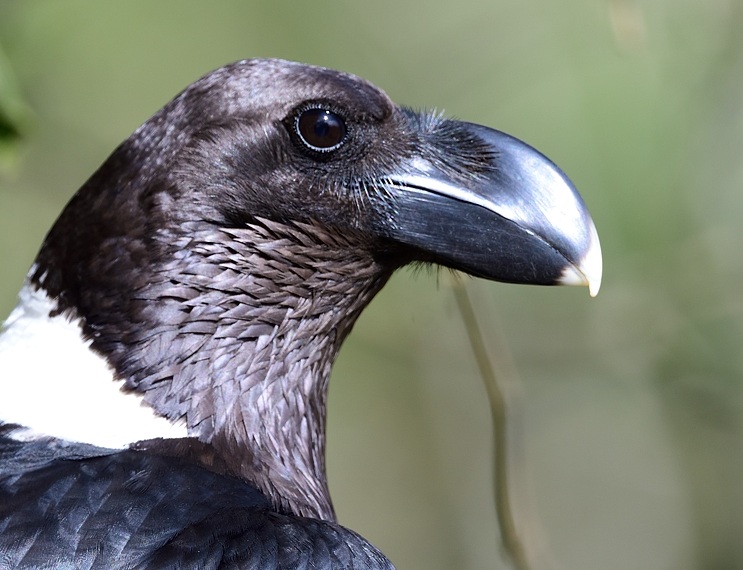
White-necked raven
As you leave the montane forest zone, flora and fauna species decrease. This is because most organisms can tolerate hostile environments in higher altitudes. The case is quite different for a white-necked raven. This blackbird flourishes at higher altitudes. You may see it at your campsite uphill.
Marsh mongoose
This mongoose is aquatic. They are usually encountered in wetlands. Unlike the white-tailed mongoose, a marsh mongoose is an exceptional predator, especially for hunting birds. Quite hikers can spot it because it is afraid of noises.
Duiker
A duiker is a small antelope that usually inhabits a thick forested area. Sometimes, it may be hard to see duikers during a normal wildlife safari. They are common in Mount Kilimanjaro and Udzungwa Mountains.
The Abbott’s duiker is an endangered species of antelope. It can be spotted in a few places like Kilimanjaro. You may see duikers on the lower slopes of Mt. Kilimanjaro.
Striped mouse
Rodents always coexist with humans. A striped mouse is a rodent slightly larger than a house mice with four stripes on its back. They are active in the mornings and late afternoons. They are usually seen at campsites to obtain food.
Jackson’s chameleon
Chameleons are abundant in Kilimanjaro. You may spot three-horned chameleons, which are also called Jackson’s chameleons. These small animals are stunning with their ability to change their color.
Other animals
Buffalos and giraffes are other big games found in Kilimanjaro. They are found on both sides of the mountain. During your hike, you might see these wild cows grazing in thick vegetation. Giraffes are gentle giants known to roam in Tanzanian plains.
For best wildlife viewing, the Rongai route is the best of all. It approaches from the Kenyan side in the Amboseli National Park. This route also offers scenic views of vegetation, craters, and rocks.
Mount Kilimanjaro is a fascinating destination in northern Tanzania. Although climbing Kilimanjaro is a once-in-a-lifetime experience, spotting wild animals is a real accomplishment. If you want to experience this spectacular feeling, book with Focus East Africa Safaris.