
Tourist Activities at Lake Bogoria National Reserve: Lake Bogoria National Reserve, often referred to as “The healing place,” is a stunning saline lake nestled within the mountainous terrain of northern Kenya. Lake Bogoria National Reserve is located within the Great Rift Valley- Kenya, covering Lake Bogoria and the land immediately surrounding the lake. The lake lies in a trough below the Ngendelel Escarpment a sheer wall 600 metres (2,000 ft) high. The lake covers 32 square kilometers and 107 square kilometers of the entire area. The national reserve is managed by the Kenya Wildlife Service. The park was established in 1970. One of the mots enhancing things about this stunning lake is the opportunity to see the Hot springs and the flamingos. The area is so green and beautiful. It’s actually the home at times to one of the world’s largest flamingos.
However, this article focuses on some of the tourist activities you can engage in while on your Kenya wildlife safaris in this stunning reserve. They include;
Game viewing
Lake Bogoria National Reserve is home to a variety of wildlife species. The reserve habitat is home to greater kudu, though sightings are rare. During your game viewing safaris, you will also have the chance to encounter different wildlife species such as Warthog, Kirk’s dik-dik, Grant’s gazelle, impala, Burchell’s Zebra, Vervet monkeys, olive baboons, leopards, spotted hyenas, and mongooses. you will also have the chance to spot colorful species and plants.
Flamingo Watching
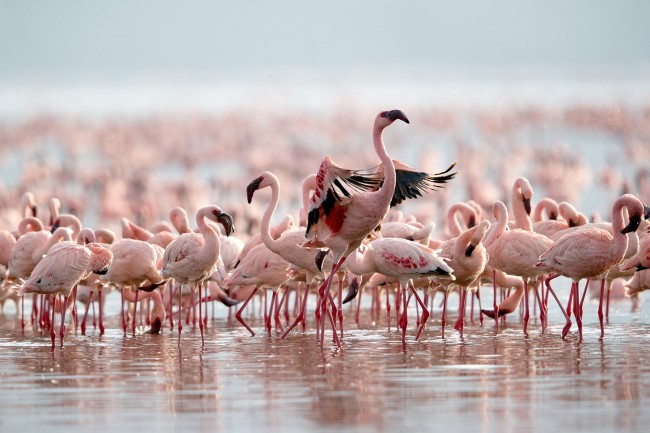
One of the most incredible activities at Lake Bogoria National Reserve is watching flamingos. Imagine sitting quietly by the water’s edge, gazing at thousands, sometimes even millions, of dazzling pink flamingos drifting across the shallow lake. It’s a breathtaking sight, If you get too close, these graceful birds will move away a bit, but if you find a comfortable spot and stay still for a little while, they often return to their original positions, allowing you to enjoy the scene. The best times to observe these stunning birds are in the early morning or just before sunset when they are most active and the light highlights their vibrant colors beautifully.
Boat trip at Lake Baringo
Boat trip at Lake Bogoria is one of the most exhilarating activities you shouldn’t miss while on yore Kenya safaris in this reserve. The reserve is home to aquatic species such as bird species, crocodiles, and hippos among others. During your boat trip tours, you will have the opportunity to spot variety of these fascinating creatures as well as stunning surroundings.
Cycling
One of the exciting activities to enjoy at Lake Bogoria National Reserve is cycling. Riding a bike around the lake allows you to soak in the beautiful scenery and the rich variety of landscapes within the park. As you pedal along, you’ll have the chance to ride past bubbling hot springs and active geysers. Don’t forget to bring your camera to capture some amazing photos of the stunning sights you encounter along the way.
Guided nature walks
Exploring Lake Bogoria National Reserve offers a fantastic chance to connect with nature. One of the best ways to experience this beautiful area is through guided nature walks. During these walks, visitors can discover the unique hot springs and enjoy breathtaking views of the lake, which is home to vibrant flamingos. Additionally, you’ll have the opportunity to observe the rich variety of plants and animals that call the reserve home. It’s a perfect way to immerse yourself in the natural beauty and biodiversity of Lake Bogoria.
Boiling of the egg on the springs
As the spring steams up, this will get your attention, to think of eating something. As you explore the reserve, the sight of steaming springs quickly grabs your attention. Just outside the reserve, local women sell raw eggs for curious visitors. You can take your egg and submerge it in the hot springs to make your own hard-boiled or soft-boiled egg. Within a few minutes, you’re good to go, enjoy your egg as you watch the flamingos. Silently hidden away and surrounded by hills at the bottom of the rift valley is this magical sight of the hot spring.
Bird watching.
Lake Bogoria National Reserve is home to over 350 bird species, with the main attraction being an estimated two million lesser flamingos. Birdwatching safaris in the reserve is best done in the Kesubo swamp and along the shores of Lake Bogoria. During your birdwatching tours, you will have the opportunity too spot bird species such as little grebe, flamingos, pratincole, swift, little bee-eater, cape wigeon, yellow-billed stork, African spoonbill, augur buzzard, gabar goshawk, water dikkop, great tit, starling, hornbill, crombec and among others,
What is the best time to visit Lake Bogoria National Reserve?
The Flamingos can be seen throughout the year. The ideal time to explore Lake Bogoria National Reserve is from July to October, which is the long cool-dry season. During these months, there’s less rain, and this makes the remaining water sources scarce. As a result, animals gather near the few freshwater spots available, making it easier for visitors to see wildlife.
Where to stay in Bogoria National Reserve.
Bogoria National Park offers accommodation ranging from budget, mid-range and luxuries, the accommodation. some of the accommodation options here includes Lake Bogoria Spa Resort, Lake Bogoria Zakayos Hotel, campsites inside like Acacia campsite, Riverside campsite, Fig tree campsite. You can also opt to camp outside the reserve such accommodation options include Loboi River camp, NETBON camping site and Emsos community camp among others.
How to get to Bogoria National Reserve
To reach Bogoria National Reserve, you’ll need to cover a distance of about 250 kilometers (or 155 miles) from Nairobi. It’s important to have a four-wheel-drive vehicle since some of the roads can be rough. If you’re coming from Lake Nakuru, the southern entrance to the reserve is 38 kilometers (around 23 miles) to the north. If you decide to travel from Nakuru to the northern entrance, be prepared for a longer journey of about 150 kilometers (approximately 93 miles).