
Top Attractions in Tanzania : Despite being filled with many tourist attractions such as the famous Serengeti national park, Ngorongoro crater, Mount Kilimanjaro national park, the Zanzibar Island, and many more, Tanzania is also home to many Tanzania safari activities that can be enjoyed by every kind of traveler, from solo travelers to family travelers, and honeymoon safari Travellers.
Tanzania has plenty of things to do, such as game drives in the Serengeti national park, horseback riding, walking safaris, snorkeling and diving in Zanzibar Island etc. Consequently, safaris and other wildlife-related activities are the most well-liked activities in Tanzania and the main reasons tourists come there.
The majority of tourists will find themselves landing at the Kilimanjaro international airport for the famous northern safari circuit for wildlife tours and at Dar es Salaam Julius Nyerere international airport on their way to the surrounding districts and other places, such as Zanzibar for beach lovers. What are the top-rated tourist attractions in Tanzania? The following are the top-rated tourist activities that you should visit in your next Tanzania safari holiday:
- The Roof of Africa-Mount Kilimanjaro
Mount Kilimanjaro is the Africa’s tallest peak and also the tallest free standing mountain in the world and is Tanzania’s most recognizable landmark (5,895 m above mean sea level). In contrast to other parks in northern Tanzania safari circuit, visitors to Mount Kilimanjaro National Park come to gaze in wonder at the majestic snow-capped peak and, for many, to climb to its summit. Although Mount Kilimanjaro may be climbed year-round, the optimum time to do it is from late June to October, when the weather is dry.
A World Heritage Site, Kilimanjaro, was created over a million years ago by volcanic action in the Rift Valley. Shira, Kibo, and Mawenzi are three volcanic cones that formed roughly 750,000 years ago. Uhuru Peak atop Kibo, one of the Seven Summits of the globe, is the highest peak of this majestic mountain.
- Zanzibar Beaches
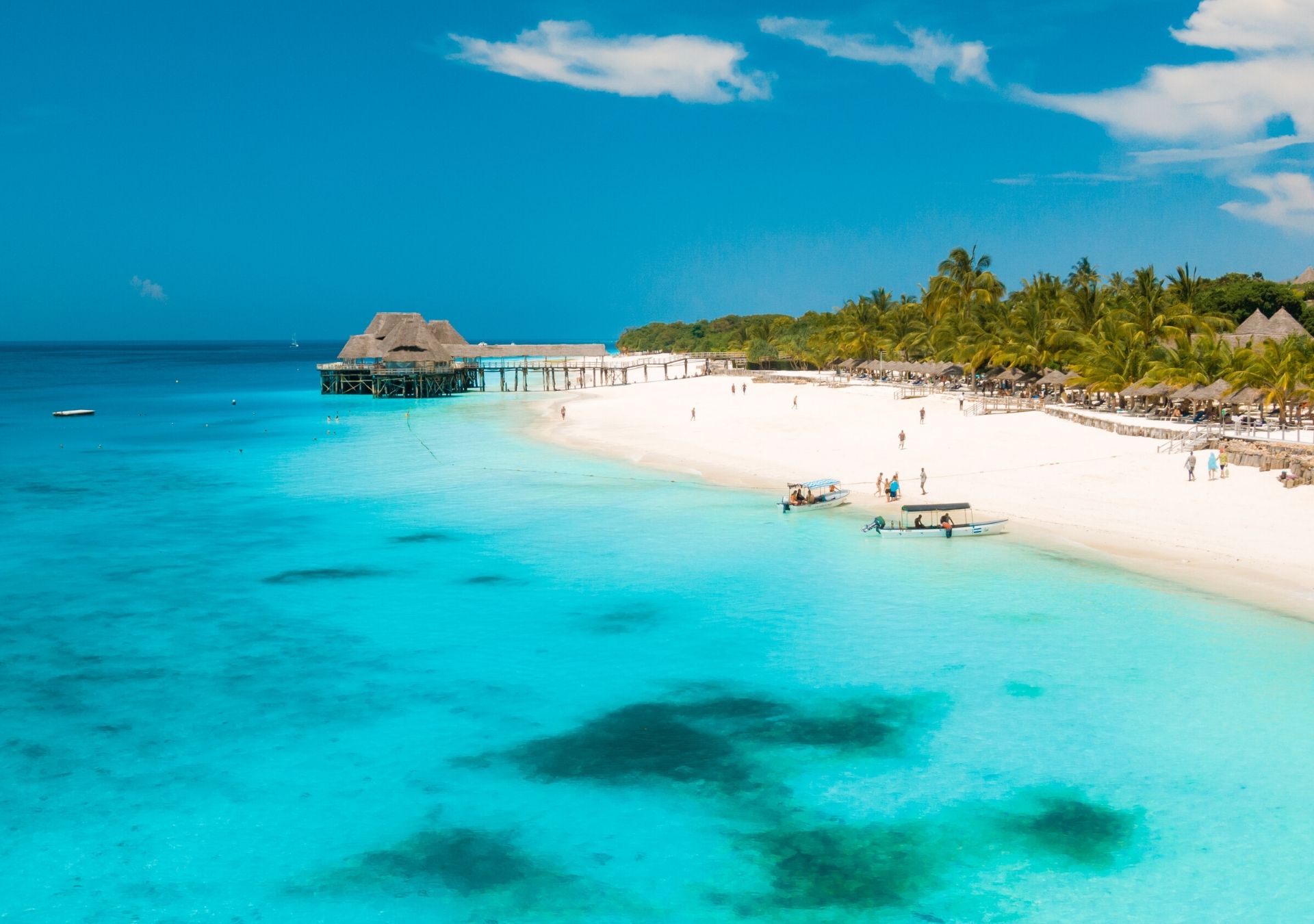
The Tanzanian island of Zanzibar, often called Unguja, is a popular vacation spot noted for its stunning and alluring beaches. This island is a part of the Zanzibar archipelago, which also includes Pemba and Zanzibar. Pemba offers some of the nicest beaches in the world. Depending on which side of the island you are on, the surf is different, but tourists will still discover a smooth white beach, clear shallow water, and traditional boats bordering the shore. Also In the center of Zanzibar sits the historic city of Stone Town, which is renowned for its ancient Arabian mansions, little lanes, and bustling port.
- Ngorongoro Crater
The Ngorongoro Conservation Area, one of Tanzania’s most well-known wildlife viewing locations, is situated halfway between the Serengeti and Lake Manyara National Park. It is home to the spectacular volcanic Ngorongoro Crater. Numerous creatures are attracted to this massive volcanic crater because it always has water available, preventing them from traveling far.
The main reasons people visit this place are to see big animals and to observe birds. Thousands of creatures, including lions, elephants, rhinos, Thomson’s gazelles, and buffaloes, can be seen on the crater floor, but more than half of the animals that live in the Ngorongoro Crater are wildebeests and zebras.
The best places for bird watching are around Lake Magadi, where thousands of flamingos congregate in the shallows. Hippos are pleased to spend the day submerged and the evening grazing on the adjacent grass.
The Ngorongoro Crater, which is around three million years old, is the world’s largest preserved ancient caldera. Before it erupted and fell, the Ngorongoro volcano was among the tallest mountains in the world. The Olduvai Gorge is another attraction in the protected area. Ancient skulls and bone fragments discovered at this significant archeological site have provided valuable information about the earliest human populations.
Decades of erosion have uncovered fossils and ancient human remains at the archeological site of Olduvai Gorge, which is located on a number of fault lines. In Olduvai Gorge in 1911, a German professor was searching for butterflies when he came across some fossilized bones. In a subsequent voyage, Dr. Louis Leakey gathered bones and skull fragments that were estimated to be 2 million years old. In Olduvai Gorge, tools and hunting equipment dating to between one and five million years ago were also found.
The iconic footprints of a man, woman, and kid at Laetoli, close to Olduvai, were another thrilling discovery. Additional proof that at least three hominid species lived in this area over two million years ago can be found in these and other findings.
- The Serengeti National Park
Millions of animals inhabit or pass through the huge, treeless plain that is Serengeti National Park in quest of new grass. The yearly wildebeest migration is its most well-known feature, but the Serengeti is also home to the Big Five and more than 500 different bird species.
Tens of thousands of tourists visit Tanzania’s second-largest national park, the Serengeti, every year. June through September are the best months to see wildlife in Serengeti National Park. The coldest time of year is from June to October, and the wet season lasts from March to May.
In May or early June, more than 1.5 million wildebeest and tens of thousands of zebra and gazelle embark on their yearly migration. One of nature’s most stunning spectacles, this migration serves as the main attraction for many visitors.
- The Lake Manyara National Park
The landscape of Lake Manyara National Park is made up of wetlands, meadows, and forests. Two-thirds of the park is submerged in water, and Lake Manyara is home to a variety of birds, including thousands of flamingos during specific times of the year.
The abundance of elephants, lions that can scale trees, and hippos that may be seen in Lake Manyara Park at a much closer range than in other parks are its main attractions. The world’s highest population of baboons resides in this park. The most popular activities in Lake Manyara National Park include wildlife drives, canoeing (when water levels are high enough), mountain biking trips, and bird watching.
- The Mafia Island
Divers and snorkelers travel from all over the world to Mafia Island to explore the underwater environment that the Mafia Island Marine Park protects. While Mafia Island experiences its greatest weather from May to October, the best diving conditions are from October to March. It rains a lot in March and April.
Mafia Island Marine Park may be home to a wide diversity of species and a calm diving environment. In the area, you can witness numerous birds and more than 400 different kinds of fish. Additionally, the historically important breeding ground for the gravely endangered green turtle is Mafia Island.
Mafia is a popular location for deep-sea fishing, particularly for big-game fish like tuna, marlin, sailfish, and others. The 8th or 9th century witnessed the arrival of the first settlers on this idyllic island, but it wasn’t until the 12th or 14th century that Mafia assumed greater significance as a trading hub for East Africa.
- Tarangire National Park.
The 1970-founded Tarangire National Park in Tanzania few kilometers from Arusha city is a fantastic place to see animals. The best time to go is during the dry season, which is from July to September, when animals congregate near the river. With more than 300 kinds of birds documented in Tarangire, the park is great for bird watching. Buzzards, vultures, herons, storks, kites, falcons, and eagles are some of these species, Top Attractions in Tanzania
Tarangire National Park hosts one of the biggest concentrations of migratory wildlife throughout the dry season. The lagoons are overrun by wildebeest, zebra, buffalo, impala, gazelle, hartebeest, and eland. The park is renowned for several other things as well, including the abundance of elephants there and the baobab trees that dot the green landscape.
- The Pemba Island
The northernmost island in the Zanzibar archipelago is Pemba Island. It has some of the best scuba diving in the Indian Ocean, with unmatched clarity, and is bordered by numerous desert islands. The underwater paradise is home to sea fans, coral gardens, and colorful sponges. Scuba divers have a well-known home base in Chake, the major city on Pemba.
Pemba has a more relaxed attitude than Zanzibar because it is less frequently visited. The island has become well-liked among mountain bikers who are lured to the 1,000-meter peaks and are rugged with deep valleys. Misali Island Beach is a must-visit location nearby. On a tropical island that is uninhabited, there is a wonderful white-sand beach.
Pemba is a significant producer of cloves globally and is renowned for its juju traditions of healing and sorcery. People go from all over East Africa to study with voodoo and traditional healers or seek treatment.
- Selous Game Reserve and Nyerere National Park
Selous is the one of the largest game reserve in Africa. It was founded in 1922 and occupies 5% of all Tanzania. The southern region is a banned region. It is undeveloped, extremely forested, and full of cliffs. Only the region north of the Rufiji River is accessible to travelers. Large open grasslands, woods, rivers, hills, and plains can all be found in this region of the Selous Game Reserve.
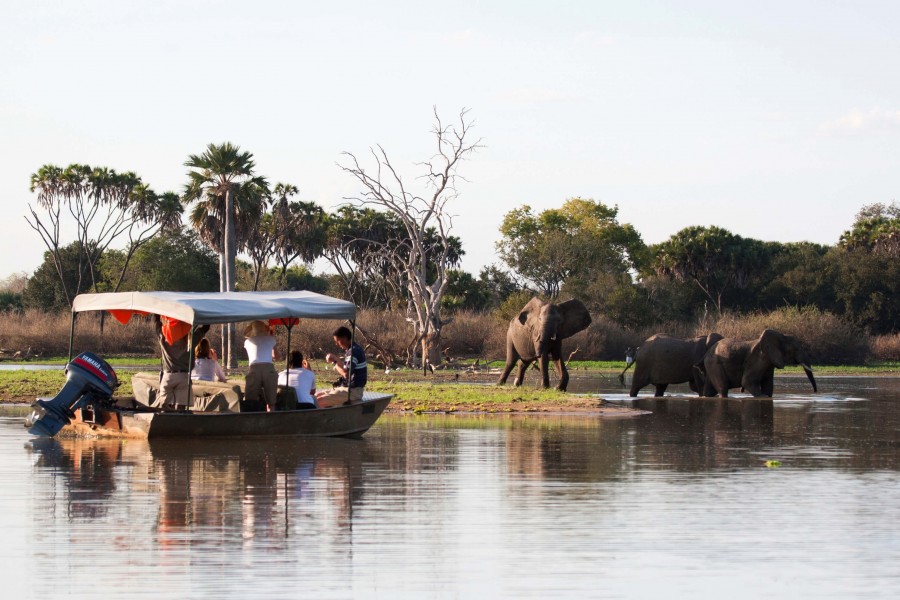
The Selous Game Reserve is divided by the Rufiji River, which has the biggest catchment area of any river in East Africa. The river is a significant element of the reserve and offers the chance to observe a variety of aquatic animals. Elephants, hippos, and rhinos can all be seen there, along with buffalo, antelope, giraffes, warthogs, wildebeest, lions, leopards, and cheetahs. In Selous, there are more than 350 species of birds that have been identified.
- Arusha National Park.
Despite being smaller than other national parks in Tanzania, Arusha has a variety of habitats, including Mount Meru’s forest, the Ngurudoto Crater in the southeast, and the Momella Lakes, a collection of seven crater lakes. While herds of buffalo, zebra, and warthog are scattered around the swampy bottom of the crater, black and white Colobus monkeys are visible in the surrounding forest. A wide variety of resident and migrating aquatic birds call Momella Lakes home. Visitors come here to view the local wildlife and to climb Mount Meru, Top Attractions in Tanzania
Tanzania’s second-highest mountain, Mount Meru, is one of Africa’s most stunning volcanoes. A thin slope that leads to the peak offers breathtaking views of the volcanic cone that is located in the crater at a height of several thousand feet below. Although there is a hard elevation, the route also travels through parkland, a forest, a large area of heather, and moorland.
- Ruaha National Park
One of the Tanzania’s largest park, Ruaha National Park, was established in 2008. It has one of Tanzania’s highest densities of elephants and vast herds of buffalo, gazelle, and other animals. Ruaha National Park’s primary feature is the Great Ruaha River, which offers breathtaking animal watching along its banks. Through a hydroelectric plant at Kidatu, the river also contributes significantly to Tanzania’s electrical needs.
Because Ruaha National Park is the least visited park in Tanzania, the environment there is still largely unspoiled. Over 400 bird species that are not present in northern Tanzania parks can be enjoyed by birdwatchers, while photographers are drawn in particular by the river, breathtaking gorges, and towering trees, Top Attractions in Tanzania
- Gombe Stream National Park.
Chimpanzee enthusiasts should primarily visit Gombe National Park, also known as Gombe Stream National Park. This is one of Tanzania’s tiniest national parks, and Jane Goodall made it famous through her research. The British researcher first came to the country in 1960 to study chimpanzees in the wild, but her work eventually led to the creation of the world’s longest-running behavioral research project, Top Attractions in Tanzania
Visitors can go on guided hikes into the forest to see chimpanzees in their natural habitat. The park is home to numerous primates and animal species. The tropical forest is home to over 200 bird species, including barbets, starlings, sunbirds, crowned eagles, kingfishers, and palm-nut vultures, Top Attractions in Tanzania
- Katavi National Park.
The secluded Katavi National Park is home to undeveloped nature. The massive flood plain, which is divided by the Katuma River and various seasonal lakes, is a defining characteristic of Katavi. Large herds of hippos, crocodiles, and more than 400 bird species can be seen in the lakes. Hippos during the end of the dry season, when as many as 200 attempt to fit into a pool of water, are one of the attractions in Katavi. Male rivalry intensifies, resulting in territorial clashes.
The dry season brings Katavi National Park to life; at the last remaining ponds and streams, herds of impala, reedbuck, lions, zebras, and giraffes can be observed. When the flood waters subside, thousands of elephants and buffalo gather in the park.
- The Lake Victoria
The largest freshwater lake in Africa, Lake Victoria, has sections in three nations: Kenya, Tanzania, and Uganda. Millions of people live near this lake, which feeds the White Nile and generates revenue for them. One of the least frequented areas of the nation is the Tanzanian portion of Lake Victoria, yet the cities of Bukoba, Musoma, and Mwanza contain a variety of attractions, Top Attractions in Tanzania.
A few of the islands that are close to Mwanza and Musoma have turned into wildlife sanctuaries. Boat tours or treks can be planned around Lake Victoria, and bird-watching and fishing trips are popular adventures. The southwest coast of Lake Victoria is home to the Rubondo Island National Park, which also contains a number of other smaller islands.