
The Mara River Crossing : The Great Migration is one of the greatest wonders the world has witnessed. If you love wildlife documentaries, you have probably watched one featuring this spectacular event. One of the interesting scenes is the Mara River crossing—a dramatic scene when over 1.7 million hoofed animals take on the great Mara River. This event is full of tragedies. Animals struggle for their lives; a few make it back to the southern Serengeti while many die due to hunger, predation, and disease. Before reaching this giant river, a herd passes through numerous obstructions. Here is a description of the whole route before crossing the Mara River.
The wildebeest migration in the southern Serengeti
From January through February, there are greener grazing grounds in the south of Serengeti. So, the wildebeest move to the south. The pasture is plentiful in areas like Ndutu and Seronera Valley. This climatic condition favors calving season, and about 500,000 calves are born. The region turns into a dramatic scene as excellent predators like lions, leopards, cheetahs, hyenas, and wild dogs follow the herd looking for an easy meal. They devour young wildebeest or weak adults.
From May to June, rainfall declines, and so does the pasture. Additionally, the seasonal swamps dry. Hence, the herd moves eastwards to find water and greener pasture. A small fraction of the herd enters the Ngorongoro Crater. Then, the herd moves through the central Serengeti, where it spends a period before migrating to the Western Corridor.
In this region, the wildebeest faces one of the biggest obstacles, the Grumeti River. At this point, the animals have no other option but to cross this river. It’s as easy as pie because the hungry Nile crocodiles find their delicious meals. After crossing the Grumeti River, the herd now heads northwards where the biggest tragedy awaits—the mighty Mara River.
Mara River Crossing
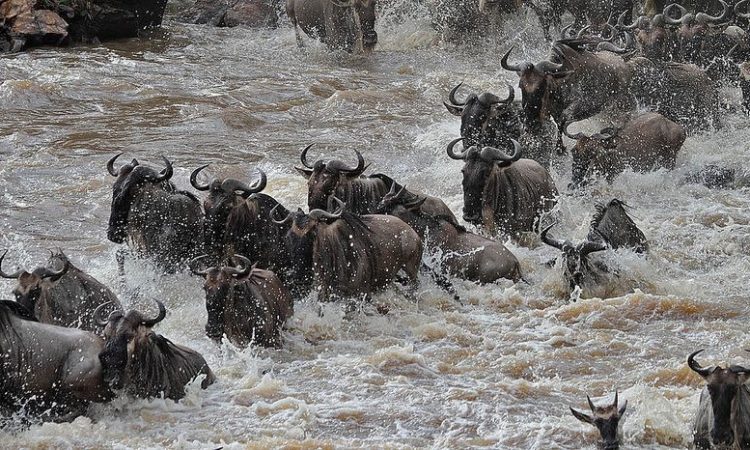
The Mara River is a spectacular river flowing in the north of the Serengeti. This river is home to dangerous predators, including the Nile crocodiles. The wildebeest herds arrive at the banks of this magnificent river between July and September. The views are superb when the Mara River is full of water. Thousands of wildebeests lose their lives trying to cross this giant river. Lions, leopards, and other predators never stop stalking their favorites. They seize every opportunity they see in front of them. While other predators are after weak animals in the herd, leopards don’t like preying on the weak ones. Leopards are excellent hunters if you happen to observe them. A leopard will disturb the whole group of prey to get them panicked, and it will go after good-looking prey.
Nile crocodiles inside the Mara River usually catch wildebeests trying to cross the river. Hence, a large number of animals are reduced to trying to cross this river. Amazing videos are shot here; the scene of a wildebeest facing a lot of tragedies on its way through the Mara River is awesome.
Most tour operating companies organize camping safaris close to the Mara River for their clients to experience first-hand views of the Mara River Crossing. The herd may cross the river to the other side, and it may sometimes cross back to the former side. This crossing and re-crossing of the Mara River may be repeated for a long time, which is enough for you to view the event well.
Where to observe the Mara River crossing?
The Mara River is situated on the boundary between Kenya and Tanzania. Since the river is not straight, some parts of it are in Tanzania while others are in Kenya. Some visitors are confused about the exact locations to observe the Mara River crossing, as some happen in Tanzanian parts of the Mara River while others take place in the Kenyan part of the Mara River.
The largest part of the Great Migration, including the Mara River crossings, happens in Serengeti National Park in Tanzania. Being part of the Great Migration is essentially a trophy to be won in the Serengeti. It is amazing to notice how these animals are clever at smelling the directions with good pastures and waters (rains). The way they follow each other is amazing since there is no leader among them.
The Mara River region guarantees a world-class safari experience. Drive out on game drives to see iconic African animals like lions, leopards, elephants, and giraffes. Keep an eye out for the elusive cheetah, known for its speed and stealth. At sunset, watch as golden and orange hues paint the expanse of the African savannah.
Tracking every move of this giant herd and writing about it is not possible. But being part of it will offer you an unforgettable memory in your mind. You can fly into Arusha in Tanzania or Nairobi in Kenya and then take a short flight or drive to the park. It’s highly recommended to book your safari in advance, especially during peak migration season, to secure your spot and accommodations.