
Tanzania Hiking safaris : Mountains are a common sight in Tanzania to explore on a safari. They might perhaps be considered among the richest things to so on a safari. It can be challenging to choose which Tanzanian mountain best suits your interests if you enjoy hiking or mountain climbing.
Mount Kilimanjaro: The Highest Mountain in Africa.
Without a doubt, Tanzania’s most well-known mountain is Mount Kilimanjaro. It is not just Africa’s highest mountain, but also the highest peak in Tanzania. The highest free-standing mountain in the world above sea level is Mount Kilimanjaro, rising to a height of 19,340 feet.
The Rundugai Hot springs are wonderful if all you want to do is unwind and take a break. While the natural heat releases all of the tension from your muscles, explore the pristine waters.
Trekking to the Kilimanjaro Waterfall: The Kilimanjaro waterfall is a beautiful waterfall that makes for a great day adventure. Even novice hikers can easily complete the journey because the trail is not as steeply inclined as the one that leads to the waterfall on Mount Meru.
Climbing Kilimanjaro: Rather than trekking to the top of the mountain, consider climbing the mountain if you’d like to take in the beauty and grandeur of the peak. You can pick between a one- or two-day trips, spend the night on the mountain, and take in the beauty and tranquilly without having to endure the exhaustion of a strenuous ascent.
The possibilities are infinite, and this mountain genuinely offers far more than most people realize.
Others Mountains You Should Not Miss
Mount Mawenzi.
After Uhuru Peak, Mount Mawenzi is the second-highest peak in Tanzania on the Kilimanjaro mountain range. You have a tonne of activities to choose from near this mountain. This mountain offers three distinct hiking paths, each with a different degree of difficulty: Hiking this mountain is generally not too difficult, and you should be able to reach the peak on the same day that you begin your journey. This is a great chance for you to appreciate the scenery and snap pictures before you head back.
Klute Peak.
One of the summits that makes up Shira Mountain and, by extension, Mount Kilimanjaro is Klute Peak. It is not typically used as a walk or climb on its own. Rather, it is a component of several paths that climb to the top of Kilimanjaro.
Mount Meru.
Mount Meru is the third-highest mountain in Tanzania and is somewhat well-liked by travelers. It is far less difficult to trek or climb than Mount Kilimanjaro, but it still affords you the chance to take in breathtaking views and an amazing hike. Mount Meru’s very own waterfall is only one of its many wonderful features. After a relatively short journey, you’ll find breathtaking vistas if you trek to the Mount Meru Waterfall. Without the stress of visiting some of the other falls, take in the beauty and peace of the waterfall.
Mount Hanang.
The fifth-highest mountain peak in Tanzania is Mount Hanang. Even though it’s not the most famous peak in Tanzania, it’s nevertheless stunning. Similar to Mount Mawenzi, the summit can be reached via three primary, well-established hiking trails. The Giting Route, the Ngendabi Route, and the Katesh Route are your options. The Katesh Route takes about six hours to ascend and five hours to descend. The times for the Ngendabi and Giting Routes ought to be comparable. The specifics of any path, though, could differ greatly.
Mount Ol Doinyo Lengai.
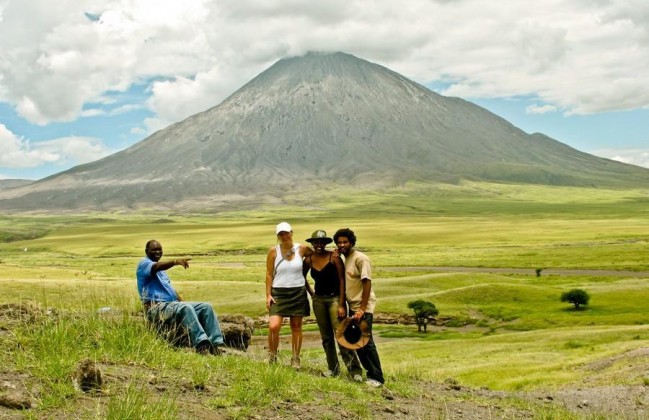
Maasai, a native Tanzanian population, refer to Mount Ol Doinyo Lengai as “The Mountain of God.” It is believed by them that the god Engai settled there following a hunter’s successful arrow strike. The peak is an active volcano that last erupted violently in 1993. It has two craters, the other of which is submerged under water and usually active. This peak in Tanzania is definitely something to think about if you’re in good shape and seeking a challenge. It’s frequently regarded as one of the hardest mountain hikes at night. Situated in the Ngorongoro Conservation area, getting there requires a significant amount of travel as it’s remote from most places; yet, the walk is truly remarkable and well worth the trip.
Mount Luhombero.
From the park’s edge, you can hike Luhombero Peak, making it a longer excursion. You might choose to go on a walking safari, which will give you a better look at the surrounding landscape and wildlife. But this will also make a walk that takes one or two days stretch to five or six days. There are numerous options available, each with wildly varying travel schedules. For example, you can walk around the mountain if you want to take the circular route.
Another option is to use a quicker and more direct path, which will save a lot of time. This mountain is definitely worth the effort and will reward you with a variety of fascinating experiences and breathtaking panoramas, no matter which route you choose. Tanzania boasts 2,395 recognized summits and hills of significant prominence. That is not to argue that the number of peaks is limited. There are countless lesser-known or smaller summits that are just unnamed. Naturally, there are a number of other mountains in Tanzania that are also very noteworthy. Let’s examine a couple of them in more detail.
Olmoti Crater.
One of the finest hikes for novices is thought to go to the Olmoti Crater. It provides a hike that is less taxing than some of the other options without sacrificing the hike’s worth. The Olmoti Crater hike, which passes through an old caldera, only takes about 40 minutes. You will be able to take in the magnificence of the Munge waterfall in addition to stunning panoramic vistas. The Masai term “olmoti,” which describes the caldera’s enormous, pot-like shape, means “cooking pot.” Although this trip is only 1.9 miles long, the altitude can be taxing due to the approximately 1,000-foot elevation.