
Get to explore kigosi national park : A national park was established at Kigosi in 2019. It has an area of 8265 km2 and is a Malagarasi/Moyowosi Wetlands Complex, the biggest in East Africa. In actuality, it is a portion of a vast shallow basin that is drained by seven slowly flowing rivers: the Malagarasi, Moyowosi, Nikonga, Ugalla National Park, Kigosi, Nikonga, and Gombe (which should not be confused with the Gombe Stream where the chimpanzees live). These rivers wind their sinuous ways through a vast and intricate network of swamps, plains lakes, and woodlands. Eventually, these rivers merge to form the Malagarasi River, which near Ilagala, empties into Lake Tanganyika. The total system area exceeds 92,000 square feet. Its area is km, making it bigger than the entire country of Portugal. According to estimates, it provides nearly 30% of fresh water in Lake Tanganyika. The entire area has been declared as a wetland of international significance (Ramsar site). Kigosi National Park is located in the complex’s northeast, where the Nikonga River joins the Moyowosi wetlands complex and drains shallow, undulating Miombo woods.
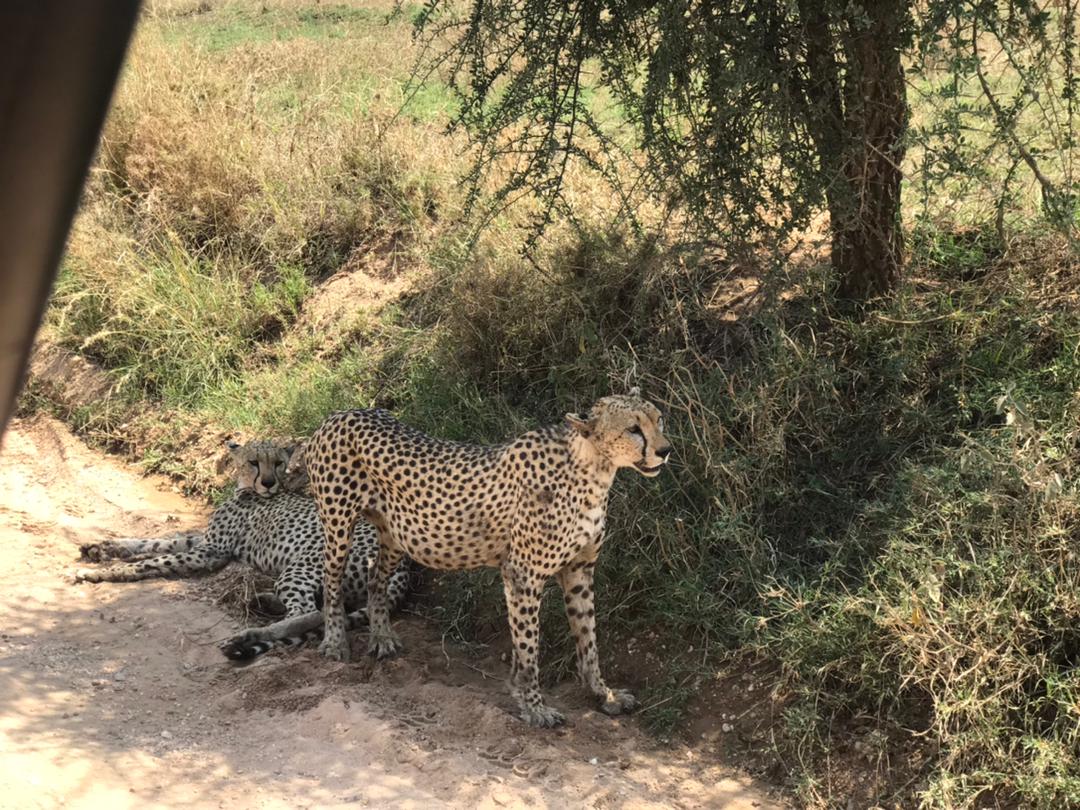
Because of the difficult terrain, many areas have never been visited or thoroughly investigated, despite the fact that Africa is blessed with abundant wildlife of both exceptional quality and quantity. The tall and exquisite wattled crane and the unusual and slightly ominous shoebill stork have their greatest populations in Africa there. The largest flocks of pygmy geese in Africa are present, Get to explore kigosi national park. The largest concentrations of Cape clawless otters in Africa can be found in the Moyowosi wetlands. Lion, leopard, buffalo, crocodile, topi, sitatunga, warthog, baboon, zebra, sable, roan, eland, bushbuck, oribi, common and Bohor reedbuck, hyena, hippo, and Defassa waterbuck are just a few examples of the abundant big game. The lion populations in western Tanzania are well-known, and Kigosi is no exception. The Miombo forests are home to big game in addition to lions. Numerous buffalo, sable, roan, kudu, leopards, and topis are present. Sightings of the elusive, water-loving in the South’s swamps. For the sitatunga, this is one of the biggest protected areas in East Africa. Waterbuck, hippo, and crocodiles have the ideal habitat in the wet areas. Shoebills, wattled cranes, and great snipe are just a few examples of the uncommon water birds that thrive in the wetlands.
The landscape is interesting. Miombo woodlands surround vast lakes and marshes, many of which have floating palm and papyrus islands, and grassy flood plains dotted with palm trees. Water is crystal clear. Many of the lion prides in this area have mastered the art of luring buffalo into small marshes, where they can be killed by drowning and then dragged out to be torn apart and eaten.
When it comes to business tourism, Kigosi is comparatively unknown. It’s one of those undiscovered locations that is primarily recognized for its environmentally friendly travel. In one of Tanzania‘s least visited areas, the reserve currently focuses on tourism and provides privately led photographic safaris, Get to explore kigosi national park
Variety of activities can be done here. These include game viewing from a moving vehicle in the woodlands and plains, while shallow draft inflatable boats and punt-style boats are perfect for enjoying the lakes and wetlands. Additionally feasible are walking safaris. Walking safari provide enough time for visitors to direct contact the beautiful nature of Kigosi national park and the good climatic condition found in there. Most of visitors enjoy walking safaris as they will be the guidance of the skillful guide in the park. the nature of walk in Kigosi national park is done by the tourists organize themselves and move in a group while walking in the park under the proper guidance of the tour guide and the tourists are able to enjoy the wonderful nature of Kigosi national park.
Additionally, hunting activities are permitted in Kigosi National Park, but you must make arrangements with guides in advance and have a permit to do so.
Kigosi, albeit not a well-known travel location, has unquestionably earned its position there. The reserve is in the Kigoma Region and is reachable by both air and road. Commercial flights are available from Dar es Salaam’s international airport to Kigoma and Mwanza on Lake Victoria.
The best way to get to bush airstrips is by private charter, while getting there by car is still an option.
Although there are campgrounds where guests can stay in tented camps, it won’t be long before there are also possibilities for chic lodges and long-term tented lodges. Kigosi is a good addition to a route that includes the Serengeti, Lake Victoria’s southern region and islands, and Burigi Chato National Park, Get to explore kigosi national park.
The greatest time of year to go is during the dry season, which lasts from June to September. Roads are less muddy and clearer. As the thickets thin, it becomes simpler to see wildlife. The area gets a lot of rain between February and November, which causes flooding and swamping, especially in the southern part of the park.
The reserve doesn’t offer any places to stay. Although it is advised, camping in the region requires permission from the locals. On the outskirts of the park, visitors can stay in conventional safari hotels and tented lodging, or in modest A-frame tents at the neighboring Moyowosi Game Reserve.