
Exploring the hidden gem of Ol Pejeta Conservancy: The Ol Pejeta Conservancy is a non-profit wildlife haven located in Central Kenya’s Laikipia County. The sanctuary covers an area of approximately 360 square kilometers and it’s found on the equator, just west of Nanyuki, between the Aberdare’s and Mount Kenya. The Ol Pejeta Conservancy works to conserve wildlife, provide a sanctuary for great primates, and generate income through wildlife tourism and complementary enterprises for re-investment in conservation and community development.
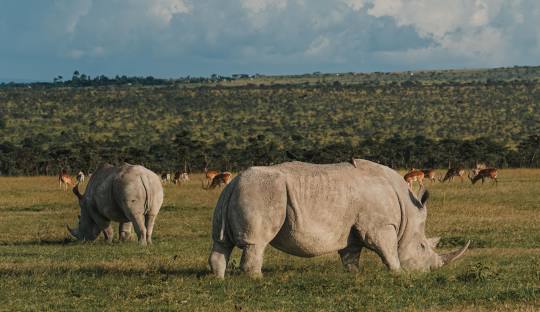
One of the standout features of Ol Pejeta is that it has the largest sanctuary for black rhinos in East Africa. In 2013, the number of eastern black rhinos there reached an impressive hundred. Additionally, it is home to the last two northern white rhinos on the planet, which were relocated from a zoo in the Czech Republic. Visitors can also find the Sweetwater’s Chimpanzee Sanctuary here, the only place in Kenya where you can see chimpanzees, many of whom have been rescued or abandoned. The Conservancy offers the chance to see iconic African wildlife, including the “Big Five,” and operates programs that support local pastoralists while promoting coexistence with wildlife. Their community initiatives help fund projects related to health, education, clean water, and infrastructure, as well as offering training in agriculture and community-based tourism.
HISTORY AND BACKGROUND
Back during the colonial period, the Laikipia Plateau was mainly used for cattle ranching, as the region didn’t receive enough rain for crops. This shift to ranching became the best way to use the land.
In 1949, John and Jane Kenyon took over Ol Pejeta from Lord Delamere. They worked with a school friend of Delamere’s, Marcus Wickham Boynton, to transform the ranch into a profitable beef business. Over time, the ranch expanded from its initial 230 square kilometers to around 360. After stepping away for a year in 1958, the Kenyons returned to manage the property for another decade before moving on to their own cattle ranch in the north. Different owners followed, including Boynton and arms dealer Adnan Khashoggi, who was very wealthy in the early 1980s.
As time went on, cattle ranching became less viable. Elephants that once passed through the area began to settle there permanently. Consequently, the fences meant to protect the cattle became more of a liability, and it became hard to manage them effectively. With wildlife numbers declining in other regions, attention turned toward conservation. In 1988, a previous owner, Lonrho Africa, established the Sweetwater’s Game Reserve, mainly to protect the endangered black rhinos. Since that time, populations of various wildlife, including the “Big Five,” have been gradually increasing.
In 2004, the conservancy was purchased by the UK-based conservation group Fauna and Flora International (FFI), thanks to significant support from the Arcus Foundation, a philanthropic organization. The Arcus Foundation donated $15 million to buy the land outright, and they worked with FFI and the Lewa Wildlife Conservancy to transform the area into a national land trust. They also contributed $12 million for development projects, enabling Ol Pejeta to run as a Kenyan-owned conservancy focused on benefiting local communities while promoting economic growth. In March 2022, a project called Sad Rhinos, linked to the Cardano NFT initiative, began partnering with Ol Pejeta to help raise funds for its conservation efforts.
WILDLIFE AND BIODIVERSITY
Ol Pejeta is a sanctuary famous for hosting the largest population of black rhinos in East Africa and the last two northern white rhinos in the world, Najin, and Fatu. The rhinos live in an endangered species enclosure that is monitored around the clock to protect them from poaching.
Other endangered species like chimpanzees, oryx, serval, elephant, African wild dog, cheetah, lion, leopard, hippo, Grevy’s zebra, bat-eared fox, and the locally threatened Jackson’s hartebeest. In addition to these rare animals, a wide range of common wildlife, such as giraffes, vervet monkeys, baboons, and various types of antelope, thrive here.
BIRDLIFE OF OL PEJETA CONSERVANCY
The conservancy is also home to over 300 bird species, making it a rich biodiversity hotspot. Some of these bird species include Common Ostrich, Helmeted Guineafowl, Shelley’s Francolin, Yellow-necked Spurfowl, Knob-billed Duck, African Black Duck, Northern Shoveler, Maccoa Duck, African Sacred Ibis, African Spoonbill, Little Grebe, Squacco Heron, Black-crowned Night-Heron, Black-headed Heron, African Open-billed Stork, Saddle-billed Stork, Abdim’s Stork, Hamerkop, Great White Pelican, White-backed Vulture, Long-crested Eagle, Reed (Long-tailed) Cormorant, White-breasted Cormorant, Eurasian Marsh Harrier, Secretary bird.
Other birdlife you may also spot here includes African Hawk-Eagle, African Fish Eagle, Common Moorhen, Grey Crowned Crane, Lesser Kestrel, Kori Bustard, Spotted Thick-knee, Black-winged Stilt, African Finfoot, Collared Pratincole, Black-winged Lapwing, Greater Painted snipe, Grey-headed Gull, Verreaux’s Eagle Owl and White-bellied Go away-bird among others