
Explore Lake Tanganyika : When traveling through Tanzania, Lake Tanganyika is a lovely place to stop and take your breath. It has white sand beaches, turquoise blue lakes, and old mango trees. That doesn’t mean there aren’t any opportunities for adventure; in this location, you can go on a hike through a dense forest in search of Tanzania’s chimpanzees or simply relaxing on its white sand beaches matching that one of Zanzibar island.
It is the second-largest (by volume), deepest (more than 1436m), and longest (660km) freshwater lakes in the world. It’s one of the oldest, dating from between nine and 13 million years ago. Due to its antiquity and biological isolation, it is home to a remarkable number of endemic fish, including 98% of the 250+ species of cichlids. Due to their vivid colors, cichlids are popular aquarium fish, and they also make Tanganyika a top snorkeling and diving destination.
The English explorers Richard Burton and John Speke first introduced this immense inland sea to the rest of Europe in the middle of the nineteenth century. When they reached its shores in February 1858, after searching for it as the Nile’s origin, they learned that the Ruzizi River in the north, which they believed to be the Nile, actually flowed into the lake rather than out of it.
Tanzania, Burundi, Congo DR, and Zambia are all bordered by the waters of Tanganyika. Its enormous depth results from its location within the Great Rift Valley, which also gave rise to its rocky shoreline. It sinks to a staggering 1433 meters (4,700 feet), or 642 meters below sea level. Although not tidal, the fertile circulating surface water supports its residents with an abundance of plankton, which in turn supplies much-needed protein for both the local and export markets. The shallow water snail-borne parasitic disease bilharzia is prevented from spreading by the strong winds that come off the mountains in the area.
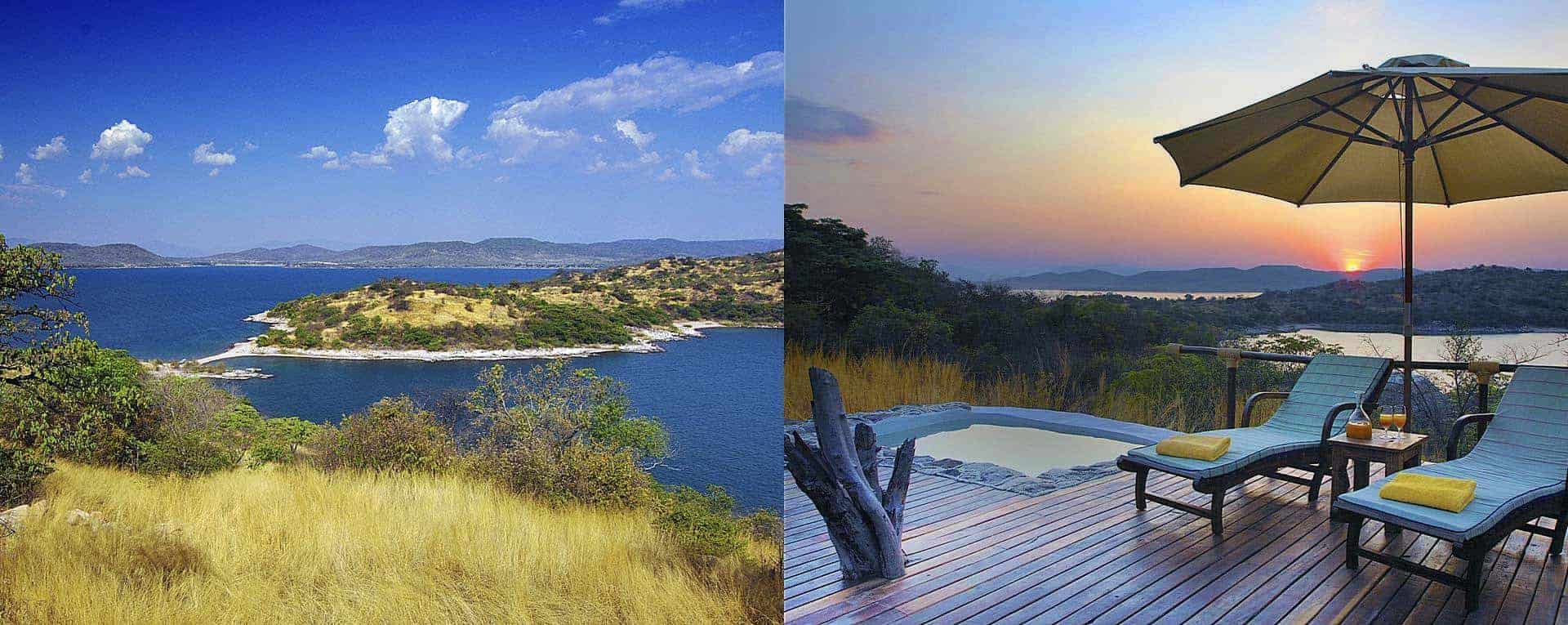
In the Great African Rift Valley, Lake Tanganyika was formed. It has long, deserted beaches of silver sand and is surrounded by tropical forest on blue mountain ridges, where lacy waterfalls cascade hundreds of meters through lush ravines. The lake is home to many primates, including the Gombe and Mahale wild chimpanzees, as well as a wide range of mammals, birds, and butterflies, Explore Lake Tanganyika .
It is the ideal location for an unconventional beach vacation in Africa. The Ruzizi, Kalambo, and Malagarasi rivers all contribute to the filling of Lake Tanganyika. Before Lake Tanganyika was created as a result of the formation of the Great African Rift Valley, the latter flowed directly into the Congo River millions of years ago.
Focus East Africa Tours’ real Lake Tanganyika tours provide an unparalleled opportunity to witness evolution in action. You may get up close to thousands of rainbow cichlid fish, representing over 250 species and ranging in size from your fingernail to the length of your arm when snorkeling in the shallow lagoons. It is believed that each community developed unique colorings as a result of females selecting the most beautiful mates as populations with different hues became shut off from one another by shifting sandbanks.
A LANDLOCKED SEA
Although it is mainly a landlocked sea, it occasionally overflows into the Lukuga River, which then feeds the Lualaba River in the Congo DR.
There is no mixing of the lower remnant waters despite the fierce surface storms that can produce waves up to six meters (20 feet) high. The lake’s bottom 1,200 meters remain “dead,” as there is either too much hydrogen sulfide or not enough oxygen to support life. This “fossil water” could be 20 million years old. In contrast, the oceans support life at depths of up to 11, 000 meters due to currents and upwelling (36, 080 feet).
The temperature over Lake Tanganyika is extremely constant. The lower regions are only 3° C below the surface. The peculiar occurrence’s cause is still a mystery.
Lake Tanganyika safari: how to explore Lake Tanganyika in Your Tanzanian Adventure?
The Tanzania western safari circuit, which also includes Katavi National Park, the Mahale Mountains National Park, and Gombe Stream National Park are the perfect suitable destination that can be explored together with Lake Tanganyika. Due to its isolation and high cost, this circuit is rarely visited. Unlike Tanzania’s major parks like Serengeti and Ngorongoro, travelers visiting the western circuit are rewarded with pristine nature, high wildlife concentrations, and a private safari experience. There are just three places in Tanzania where chimpanzees can be found, two of which are the Mahale Mountains and Gombe Stream on which all of them can be explored together with Lake Tanganyika.
The Tanzania Western Safari Circuit
Just over 4,000 square kilometers of untamed nature make up Katavi National Park, which is renowned for having a lot of big creatures like hippopotamuses, elephants, and lions. A highly endangered species of wild dog finds refuge in Katavi.
The Mahale Mountains National Park, which borders Lake Tanganyika, is a haven for primates. The rare Red and Angola colobuses, as well as the red- and blue-tailed monkeys that swing across the forest canopy and are home to less than 1,000 chimps, are the main draws. A birdwatcher’s paradise, the woodland is also filled with vibrant forest birds.
The majority of Jane Goodall’s groundbreaking chimpanzee research was done at the small, on the shores of Lake Tanganyika, Gombe Stream National Park. The park has a breathtaking woodland habitat with deep valleys, rivers, and streams. Similar to the nearby Mahale Mountains National Park, the flora ranges from tropical rainforest to alpine bamboo and huge grasslands.
The western safari circuit is frequently more expensive than other circuits because it is mostly accessible from Arusha and Dar es Salaam by boat or flight. The distances between the major cities are too great.
Tourist activities: Things to do at Lake Tanganyika
Snorkeling and diving
Dive and snorkel enthusiasts should visit Lake Tanganyika. The year-round water temperature is 25 degrees Celsius, and during the dry season, visibility can reach depths of 20 meters. There are countless vivid and colorful cichlids in the lake. In this lake, there are 250 different species of cichlids, Explore Lake Tanganyika .
Since most diving occurs near the shore, it is ideal for novice and experienced divers. Your PADI certification is necessary. You’ll be snorkeling with a knowledgeable native. It’s crucial to keep in mind that some portions of the lake are home to crocodiles, hippos, and Bilharzia, so working with a local expert is crucial. Kayaking, wakeboarding, and water skiing are just a few additional water sports that you can enjoy in your Tanzania safari tour to Lake Tanganyika.

Fishing
On Lake Tanganyika, fishing and angling excursions are quite popular. The lake is home to 350 different species of fish, the largest of which, the huge Nile perch, may weigh up to 80 kg. Lake salmon and goliath tiger fish are two other huge species. Fishing on Lake Tanganyika will cost a modest fee, and catch and release is the recommended method. For conservation reasons, fishing is prohibited from December through February. If you want to go fishing, stay away from these months.
Sunset Dhow Cruise
Climbing onto a dhow (traditional boat) and joining the crowd of dug-out canoes headed off to fish for the evening is one of the most popular evening activities. Onboard, you can take a 1.5-hour cruise while sipping on romantic sundowners and seeing the sunset over the lake.
Primate experiences
The magnificent Mahale Mountains and the Gombe Stream National Park are located just along Lake Tanganyika’s eastern shore. Both have robust chimpanzee habitats, with about 1,000 of them (the only parks in Tanzania with chimpanzees).
Dr. Jane Goodall’s groundbreaking research in this area during the 1960s has contributed to the habituated nature of many of the chimpanzee bands. Take a guided forest walk to see our closest living relative and up to 82 other wildlife species that live in the parks.
There is never a certainty of seeing chimpanzees. However, the likelihood is good with knowledgeable advisers. You’ll have up to an hour to observe the unit after you’ve found it. A permit is required to track chimpanzees. Chimpanzee permits are currently $150 for Mahale Mountains National Park and $100 for Gombe National Park, respectively, Explore Lake Tanganyika .
TROPICAL FISH IN LAKE TANGANYIKA
There are more than 350 fish species in Lake Tanganyika, the majority of which are indigenous. The exceptionally old Lake Tanganyika, like Lake Malawi, has led to the evolution of distinct fish populations due to its age and ecological isolation. It is difficult to say which of these remarkable lakes has the highest diversity because new species are constantly being discovered there, but they at least share the distinction of being the top two in the world in terms of biodiversity. Lake Tanganyika has the highest percentage of endemicity, which is mainly concentrated in the lake’s Zambian waters.
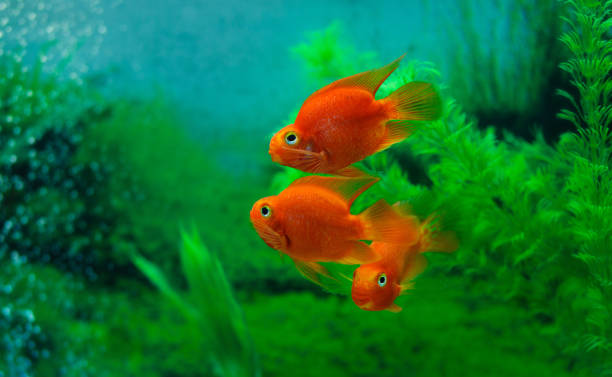
The Lake Tanganyika Biodiversity Project was established to ensure that its biological richness is preserved. The project’s goal is to create a manageable and long-lasting system for protecting and preserving Lake Tanganyika’s biodiversity. The success of the project will rely on how effectively these nations cooperate since Lake Tanganyika serves as a boundary for four nations: Tanzania, Zambia, Burundi, and the Democratic Republic of Congo. The project, which began in 1995 and is supported by the Global Environmental Facility under the United Nations Development Program.
Some of the fish species un lake Tanganyika includes The Giant Nile Perch (Lates angustifrons) and the Small Nile Perch (Luciolates stappersii), both important species for commercial and recreational fishing (angling), the Goliath Tiger (Hydrocynus goliath) and the English Fish or Lake Tanganyika yellow-belly (Boulengerochromis microlepis), both important angling species (the latter of which is prized for its delectable eating).
Accessibility: Getting to Lake Tanganyika
Because it is situated in the country’s southwest, near the border with the DRC, Lake Tanganyika is quite a distance from Tanzania’s typical safari and beach circuits. However, it is accessible via a quick flight to Kigoma region from all Tanzania major cities like Dar es Salaam and Arusha. For something a little different, the MV Liemba, a 100-year-old “indestructible battleship,” makes a five-day voyage between Tanzania and Zambia every other Wednesday.