
All to know about Nyerere National Park: Nyerere National Park is located in the southeastern part of Tanzania and encompasses a vast landscape along the banks of the Rufiji River. It was officially gazetted as a national park in 2019, although it was formerly part of the Selous Game Reserve established in 1905. The park spans approximately 30,893 square kilometers, making it one of the largest protected areas in Africa. Its diverse ecosystem includes woodland, wetland, and savanna, providing a vital habitat for various species.
The park is renowned for its rich wildlife, including lions, wildebeest, African wild dogs, black rhinos, buffalos, leopards, elephants as well as a variety of bird species. The Rufiji River supports a flourishing population of hippos and crocodiles, while also attracting migratory birds. Nyerere National Park plays a crucial role in conservation efforts, safeguarding biodiversity and ensuring sustainable tourism in the region. Its pristine environment offers visitors a unique opportunity to witness Africa’s natural beauty and wildlife in their natural habitat.
Climate
Nyerere National Park has an unimodal rainfall belt of southern Tanzania with two rains per year.
In a normal year, the short rains fall in November and December and are followed by a partial drying out in January and February. Therefore, the long rains follow ending in early May. The average rainfall varies from one part of the park to another due to variation in the altitude. Most of the northern part of the park is directly on the coastal plain and is less than 100m above sea level. The temperature range is from 13 degrees Celsius to 41 degrees Celsius.
Attractions found in the park
The park has a number of attractions that tourists can enjoy while in a safari in Nyerere National Park. Some of the best attractions are the ability to see the Big Five such as a large population of elephants and hippos, the Rufiji River full of abundant wildlife, and a large concentration of African wild dogs. The park also encompasses with beautiful and scenic landscapes that add to the beauty of this majestic park.
A large concentration of African wild dogs.
In Nyerere National Park, African wild dogs are thriving, unlike most of those elsewhere in Africa. Despite the fact, this species is highly endangered and seen in few places. The park has the last true stronghold for African wild dogs on the continent.
Rufiji River, delta, lakes, and Myriad of Oxbows
Rufiji River in East Africa largest river which flows through the northern part of the park. It’s a slow moving and wide river, creating a number of Oxbow lakes in its northern flood plains, making a beautiful landscape of plains and woodlands interspersed with expanses of water. The mighty Rufiji River with its famous population of hippos and crocodiles flows to the Indian Ocean. The river has been designated as a photographic zone and it is a popular for tourists.
Diverse bird species
Nyerere National Park is renowned as a haven for bird life. The park is home to more than 450 species of birds have been recorded. These birds are found in sandbanks and oxbow lakes, and channels are home to these species. The rare species of Pel’s fishing owls and white-backed heron live in the wooded section of the riverbank. Other bird species include, the African gray hornbill, Tanzanian red-billed hornbill, malachite kingfisher, gray-headed kingfisher, giant kingfisher, green woodhoopoe, Verreaux’s eagle-owl, yellow-billed kite, crowned eagle, lizard buzzard, secretary bird, hadada ibis, osprey, palm-nut vulture, black heron, cattle egret, little bittern, great cormorant, African darter, long-tailed cormorant, great-white pelican, shoebill, hamerkop, African openbill, marabou stork, yellow-billed-stork, African jacana, common sandpiper, crowned lapwing, freckled nightjar, black-crake, and black cuckoo among others.
High concentration of hippos and crocodiles
Rufiji River which goes through the park is home to plenty of hippos and Nile crocodiles. The huge concentration of hippos that happily live together in the puddles, especially during the dry season is a never-miss chance. One is able to see the male fight something that is truly a hair-raising watch. The area also has large crocodiles in Africa, making this remarkable for dinosaur descendants. During the wet season, the crocodiles feed many on catfish and in the dry season, they supplement their diet with animals coming down to drink.
Unique wildlife
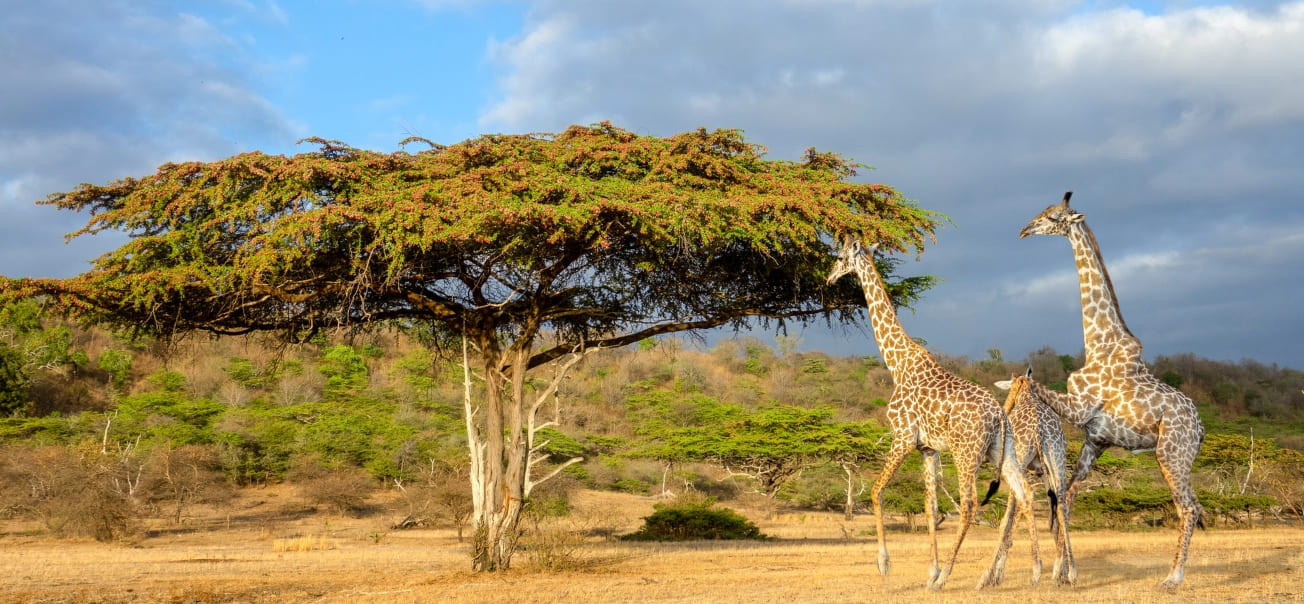
Beyond the famous elephants, rhinos, and hippopotamus, Nyerere National Park has also a vast range of game including wild dogs, leopards, topi, lions, spotted hyenas, hartebeest, wildebeest, Masai giraffes, plain zebras, impala, warthogs, reedbucks, waterbucks, greater kudu, eland, sable antelopes, Nyasaland gnu, and brindled gnu, in addition to the large concentration of buffalo in Africa.
Highlights of a safari in Nyerere National Park
Nyerere National Park has some of the activities that give tourists opportunities to enjoy its beauty. The park will give the opportunity to do night game drives, day game drives, nature walks as well as memorable boating safaris along the mighty Rufiji River.
Day game drive
Game driving along the numerous small tracks is a popular way of enjoying the wildlife. Swarming with an abundance of elephants, lions, spotted hyenas, warthogs, reedbucks, waterbucks, greater kudu, eland, sable antelopes, Nyasaland gnu, topi, wildebeest, zebras, Masai giraffes, hartebeest, impala, and defassa waterbucks is simply a magnificent sight to remember. The spotted hyena with the elusive leopard emerging on the woodland fringes is frequently seen here. Wild hunters do as well prowl her but prefer to stick to the escarpment.
Night game drives
Nyerere National Park offers unique night game drives offering an opportunity to witness nocturnal animals as well as a unique night sky. Tourist can spot shy nocturnal creatures such as leopards, aardvarks, genets, and smaller cats, feeding and fighting through the bush at night.
Boat cruise
The boat cruise is one of the main highlights of a safari in Nyerere National Park, The boat cruise offers tourists the opportunity to watch wildlife from the river or lakes in a different perspective offering a beautiful and different way of game viewing. While on a boat cruise safari, you will have the chance to spot stunning wildlife such as crocodiles, hippos, elephants, waterbucks, and buffaloes spend a lot of time near the water, but mass of other games including birds will also be seen.
Birdwatching
Nyerere National Park offers the best birdwatching safari experience in Tanzania. This is a popular and adventurous activity involving observing and studying bird species in their natural habitat. with over 450 recorded species, including common endemic, rare migratory, and non-migratory birds, visitors can learn to recognize and name species by sighting and sounds.
Nature walks
The park offers some of the most breathtaking walking safaris in the African savannah. Popular trails include trails close to Rufiji River which crosses a spectacular shore when spotting zebras, hippos, crocodiles, and stunning views. Guided nature walk tours with overnight stays in lightweight flying camps are popular.
Sport fishing
Nyerere National Park is also known as a recreational or game fishing destination in Tanzania, the park focuses on physical exertion and thrilling experiences, with tigers being the most prized game fish.
Photographic and filming
This activity can be done all year round, showcasing a rich wildlife environment. The park offers exciting photographic safaris due to a variety of wild animals, birdlife, and landscapes.
Getting to Nyerere National Park
The park is accessible but both road and air transport
By road; from Dar-es-Salaam to Nyerere National Park is about 250km via Kibiti
By air; there are regular flights from Dar-es-Salaam, Kilimanjaro, and Arusha to a number of small airstrips in the park
Accommodation facilities
The park has different types of tourist accommodation facilities including public and private campsites. The park has several lodges of different qualities depending on a personal choice located in the most pristine area of the park. there are also a number of luxury tented camps where tourists can choose a well as seasonal campsites such as Impala Tented Camp, Kiba Point Safari Lodge, Rufiji River Camp, The Amara Selous, The Retreat Selous, Siwandu Camp, Beho Beho Lodge, Mbuyu Safaris Camp, Sable Mountains Lodge, Lake Manze Tented Camp and Jimbiza Lodge among others