
8 guidelines for enjoying the best of the great migration caving season : Many tourists visit Africa, whether it’s for mountain gorilla trekking in Rwanda and Uganda, a tour of Zanzibar’s beaches, a climb of Mount Kilimanjaro, or any other African safari tour, and many of them enjoy and discover the great wildebeest migration. Simply put, a safari journey to Africa would not be complete without witnessing the Great Wildebeest Migration, which takes place in the Maasai Mara National Reserve in Kenya and the Serengeti National Park in Tanzania. The sound of water running between the legs of wildebeests as they cross Nile crocodile-infested Rivers; the sight of zebras pacing across fields; and the sight of big cats and hyenas lurking in the long grass, ready to pounce on their unwary prey are some of the unique moments that happens during the great wildebeest migration. This magnificent show should not be missed while on your African safari vacation.
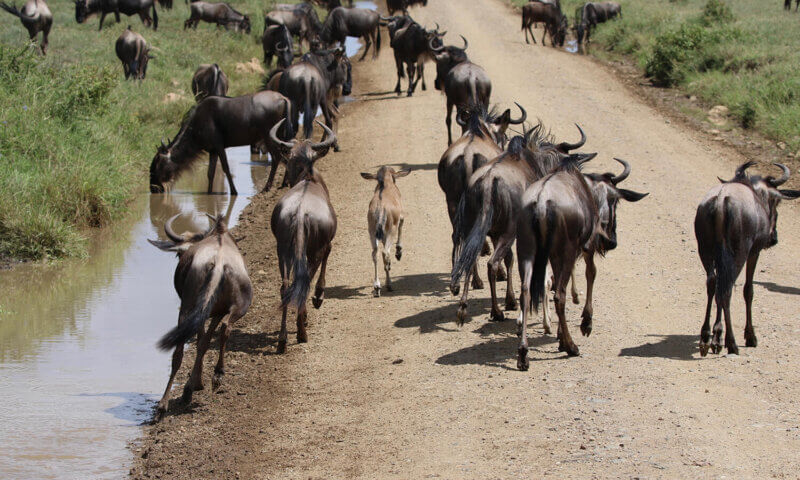
While the Great Wildebeest Migration offers a full parade of animal spectacles, you certainly don’t want to miss the amazing calving season, which takes place from January to March in the Ndutu area at the border of the Serengeti National Park and Ngorongoro Conservation Area.
THE CAVING SEASON OF THE GREAT MIGRATION
The Serengeti calving season, sometimes referred to as the time of mass birth, typically lasts from late January to early March each year in Tanzania’s southern Serengeti. In January or February, after the rains have progressively stopped, wildebeests and other wildlife species start to reproduce. With wildebeests producing an average of 8,000 young per day, the quantity of food supplies, lush grass, and surrounding vegetation all contribute to the population increase of these wildlife species.
Everyone in the herd feeds and tends to these young animals. This makes it a perfect training ground for predators because of the abundance of young and weak victims. As a result, some of the most shocking killings took place during this time. The wildebeests also have a trait known as “swarm intelligence,” which allows them to work together to systematically explore and conquer obstacles, despite the movement being chaotic. During your trip, you’ll learn some fascinating facts about wildebeests, one of which is this: One of nature’s best depictions of the circle of life is the calving season. It would undoubtedly rank among your trip’s great points. Here are some pointers to help you make the most of your calving season safari:
BOOK YOUR SAFARI TRIP WITH A REPUTABLE AND EXPERT SAFARI OPERATOR
In general, the Great Migration’s timing and the calving season are uncertain. You must make sure that the tour operator you choose for your safari is reliable, educated, and able to give you accurate information about the event as well as an excellent viewing experience. You can witness diverse prey and predator interactions as well as some of the most dramatic killings you’ll ever see on a good calving season safari. Be prepared to observe the food chain in all its brutal realism. You can only experience this with a reliable guide.
BOOK IN ADVANCE
The Great Migration can only be viewed in two locations: Tanzania’s Serengeti and Kenya’s Masai Mara. As a result, everyone would be eager to see these exotic animals, and these tours would likely fill up quickly. Book at least six months in advance to ensure a good seat for the calving season and the rest of the migration.
ALLOCATE SOME TIME FOR YOUR TRIP
You can’t rush the Great Migration’s calving season, which lasts for several months. Given that you are in the wild, you should move at a pace similar to the animals you may encounter. As your guide looks for ideal viewing areas, take your time and be patient.
GET SUPERIOR ACCOMMODATION
Your viewing experience during the Great Migration may be influenced by the safari lodging you select. Consider traveling with the herds in movable tented camps for a more immersive experience.
HAVE A REALISTIC BUDGET
Expect this vacation to be fairly pricey due to the popularity of the Great Migration and the calving season. Before leaving on your trip, make sure you have a reasonable travel budget in place to prevent unforeseen costs.
PREPARE YOUR CAMERA
This experience is meant to stay in your memories as well as in your eyes. Bring your camera so you may record some of the breathtaking activity you will witness, such as the birth of young wildlife or a predator’s hunt. Be sure to take pictures of everything you see, since it’s worth remembering.
WEAR SUITABLE SAFARI CLOTHING
As with any safari, it is crucial that you are wearing the appropriate clothing and equipment. You should be able to move freely and comfortably in the wild. Along with being weather-adaptable, your clothing should be, too. You never know when it may rain, especially during the Serengeti calving season. Ensure that you are prepared for these situations.
ENERGIZE YOURSELF
For the majority of the day, you will be out in the open fields. Make sure you have the energy to endure spending time in the sun. Additionally, the tour company might offer bush meals and snack breaks, but this is not always guaranteed. Take some small snacks with you to chew on when you’re feeling down. Just remember to keep your trash with you at all times.
Conclusion: The calving season is a thrilling and unique experience that you will never forget in your life. The great wildebeest migration includes numerous stages that occur throughout the year, such as the mating season, the calving season, the river crossing season, and many more.
You will be able to see numerous newborn wild animals being born and taking their first steps, and many of the predators in the calving area will be actively hunting for new-born kids during this time. It is very wonderful, I assure you. Hopefully, these pointers will assist you in determining how to make the most of your visit. Do you need more details, or are you ready to start planning your safari adventure? Contact us right away.