
Mukura Forest reserve is found in the northwestern part of Rwanda in a place known as Rutsiro district, the great forest was part of Nyungwe and Gishwati before being affected by human activities such as deforestation, mining and overgrazing animals. The reserve was formerly covered by about 30,000 hectares but these activities made it dramatically drop to 16,000 hectares.
The Mukura forest reserve was then gazetted as a reserve in 1951 and transformed into a national park later on the 1st of February 2016 making it Rwanda’s fourth national park, the forest reserve was combined with Gishwati forest to form a national park called Gishwati Mukura National Park.
The Gishwati Mukura national park main reason for establishment was to restore natural forests, plant natural forests by introducing tree species and protect buffer zoneplantations. The Gishwati Mukura national park boasts a variety of primate species, 293 reptile species, 5,793 plantspecies, amphibians and lots of bird species, estimated to be over 1,000.
The mountainous forest used to be one of the highest continuous areas of montane forests in Rwanda; the park provides breathtaking views of lush vegetation cover. Characterized by soft wood like Callistris spp., Cupressus spp., and pinus spp there are also other tree species, including bamboo and indigenous hardwoods.
Gishwati Mukura national park forests were earmarked as forest conservation zones in 1933. the afro mountain national park lies in the west of the Nile-Congo crest there are a lot of tourist activities to be done here, some of which can be seen below.
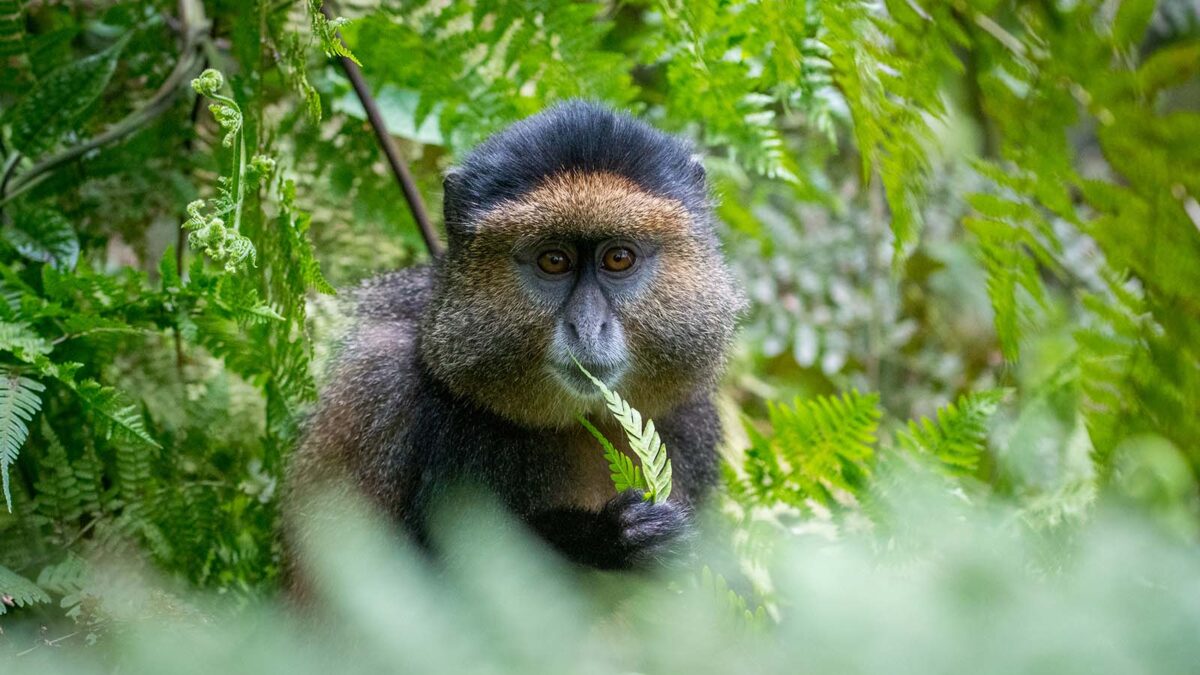
Bird watching is one of the activities of Gishwati Mukura national park the mountainous forests are a home to many species of birds, 7 of which are Albertinerift endemicspecies and 2 have been listed on IUCN list,chimpananzee plus other primates such as the mountain monkey, Golden monkey, black and white colobus monkeys and blue monkey among the rest.
Wildlife viewing is also possible due to the park’s biodiversity, which supports various species; some of the animals you can see include southern tree hyrax, black-fronted duikers, and red river hogs.
The national park now covers a total area of 12 square kilometers with an average height of 2,600 meters above sea level and a temperature of 15°C and receives rainfall of 1,500 mm annually the national park is undergoing restoration through the plantation of trees, the provision of forest guards to avoid human activities, the creation of awareness in the local communities about the importance of forests and the increase of income-generating activities outside the forest.
The World Bank and the government of Rwanda signed a 7. Billion Rwanda franc deal for the development of the national park and maintenance.
The Gishwati Mukura national park can be accessed by road from Kibuye or Kigali city, the drive from Kibuye is an hour, while the drive from Kigali takes about three hours. There’s a path that heads north from Nange, which connects Karonhi to Mukaga, that can be used to access the park.