
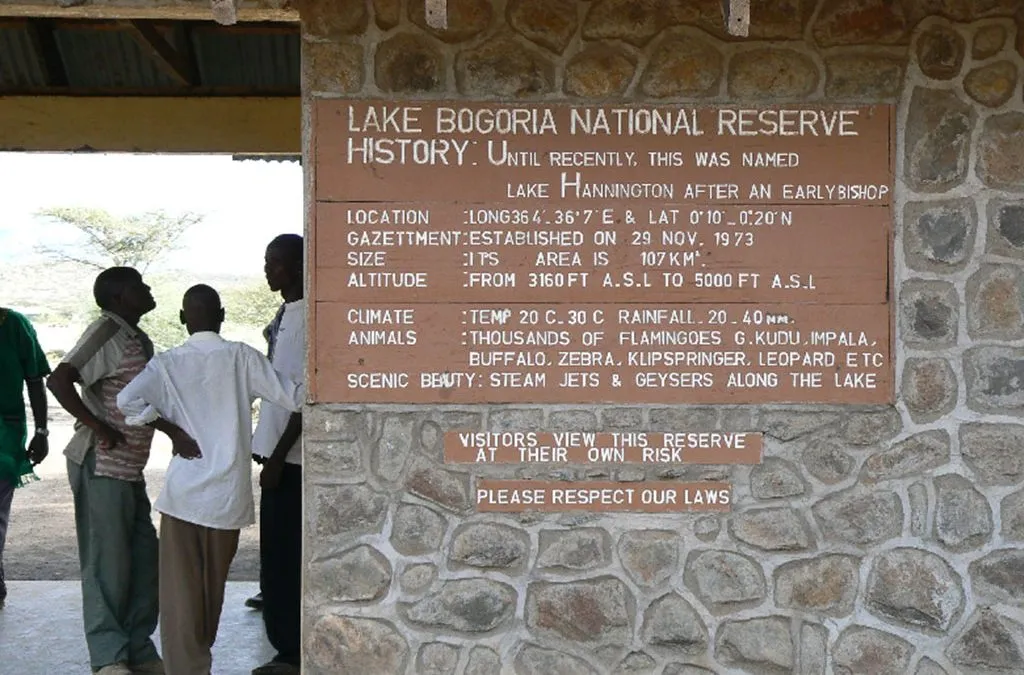
Lake Bogoria National Reserve is home to Soda Lake Bogoria and is located south of Lake Baringo in the Great East African Rift Valley. The reserve is famous for thrilling day trips to see millions of flamingoes that flood the lake, turning it pink; they relocated here after their previous destination. Lake Bogoria national reserve covers an area of 107 square kilometers.
Lake Bogoria National Reserve receives an average rainfall of 640 mm, and the temperatures range from 25° to 30°, resulting in warm conditions throughout the year; additionally, the reserve has been recognized as a Ramsar site. this lake feeds on only one river that ranges from the Abardare mountain ranges.
Lake Bogoria national reserve has been described as the most beautiful place in Africa; the lake is endowed with geysers, grasslands, papyrus swamps, and over 200 hot volcanicsprings. Other water birds aren’t common because it’s highly alkaline; the Ngendengel escarpment in which the lake lies provides one of the excellent views.
Lake Bogoria National Reserve was opened in November 1970 and designated as a World Heritage Site in 1999. Tourists can have an unforgettable experience by bathing in the hot springs; however, the Waseges River that feeds the park is exposed to pollution from agrochemicals deposited by farmlands along its banks before the water reaches the lake. There’s only one road along the lake and you will backtrackwhen getting out.
Attractions at Lake Bogoria national reserve
Flamingoes
Flamingoes are the main tourist attractions in the lake, sometimes making it pink, the views are panoramic and breathtaking, making it one of the most beautiful places in the world.
Wildlife viewing
The plains extending from the lakes’ shores are home to various animals like olive baboons, warthogs, hyenas, zebras, caracals, buffalos, dik-diks, impalas, greater kudu.
Birdwatching
In addition to flamingoes, other bird species can be observed in the lake and swamp areas, such as the black-headed heron, grey crowned crane, hadada, sacred ibis, ostrich, tawny eagle, pratincole, grebe, yellow-billed stork, Cape widgeon, water dikkop, starling hornbill, crombec, African spoonbill, augur buzzard, Gabar goshawk, and great tit.
Kesubo swamp
The Kesubo camo is one of the best places to observe other aquatic birds not accustomed to alkaline water.
Hot springs
Tourists can visit the hot springs, the most dramatic being Loburu hot springs with a road that takes tourists up to the viewpoints where you can keenly observe the volcanic escarpment and the beautiful scenery.
Nature-guided walks
The nature-guided walks offer you a very thrilling experience of a combined Kenya safari where you can come across small mammals, birds, hot springs and geysers along the way.
Best time to visit
The best time to visit the lake is from June to February, when you can have excellent views without rain interrupting.
Where to stay
There are currently no accommodation units within the reserve but tourists can sleep outside the park in the nearby hotels and lodges