
Top 3 Hidden Gems Beyond Serengeti and Ngorongoro.
The Serengeti and Ngorongoro Crater make the bucket list of many safari explorers. And of course, they undoubtedly deserve that respect. The former hosts the Great Migration, the Big Five, and the world’s largest count of predators. The latter also hosts the Big Five and one of the highest wildlife concentrations, and it’s a wonder in itself.
These destinations offer an introduction to Tanzania’s rich wildlife and spectacular landscape—hence, they are ideal for beginners. But if you are a seasoned traveler looking for off-the-beaten-path destinations in Tanzania, this article is for you. We’ve rounded up three hidden gems. Let’s dive in.
Ruaha National Park.
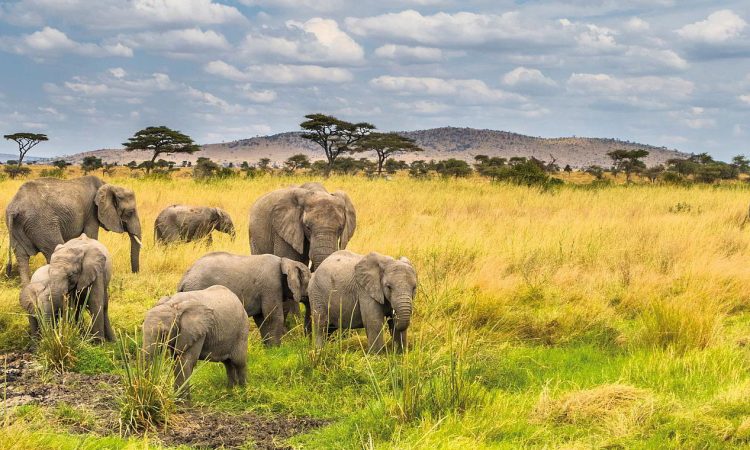
Ranked as the second-largest park in Tanzania, this expansive 20,226 km² area lies within the southern safari circuit. Here, giant baobabs stand like ancient guards, displaying their beauty. Roaming the baobab-dotted plains and woodlands are 300-strong elephants. To be clear, the largest remaining population of elephants in Tanzania lives here. Estimates put elephants at around 15,000.
In Ruaha, every game drive often feels private, resulting in wildlife encounters with animals such as lions, wild dogs, wildebeest, zebras, buffalo, giraffes, and more. A boat ride on the Great Ruaha River also comes with the views of large pods of hippos, crocodiles, and river birds like kingfishers and African skimmers. A visit to the historical sites and caravan routes within and outside the park deepens your connection with nature.
Visit it during the dry season—June to October—when the trails are dry and the vegetation is thin. Places to stay include the Jabali Ridge, Kigelia Ruaha, Jongomero Camp, Kichaka Camp, Ikuka Camp, Usangu Expedition Camp, and Ruaha River Lodge.
Nyerere National Park.
Nyerere is Africa’s largest park, spanning about 30,393 square kilometers, but the number of visitors has yet to catch up. The park receives just 1% of Tanzania’s visitors—hence, the largest part remains unexplored. Here, you can find undisturbed wildlife and scenic forests sought after by most photographers.
Game drives around its varied habitats will reward you with beautiful views of animals like wildebeest, zebras, gazelles, elephants, lions, buffalo, and leopards. If done carefully, you can encounter even the Big Five. Really? Yes—but seeing a black rhino is, of course, a bit of luck. The animal itself is solitary, hiding in shrubs and thickets. To be curious, you can search for rare animals like the African hunting dog, Lichtenstein’s hartebeest, and sable antelope.
A balloon ride (at an additional cost) is the best way to view the landscape of Nyerere National Park. Truly speaking, the Nyerere has a striking landscape—plains, acacia woodlands, rivers, and seasonal lakes all display its appearance. On a gentle aerial glide, you will watch the plains and forests turning gold as the sun emerges.
A night drive is worth it. Because many northern parks prohibit this nighttime adventure, you can try it here. The Nyerere has plenty of nocturnal species—porcupines, jackals, hyenas, owls, and even the big cats like lions, leopards, and cheetahs. Should you want another angle to experience the Nyerere, a boat cruise is something you should try.
Come to Nyerere between June and October for exceptional wildlife viewing opportunities. Or, if you want the best photograph and birding trips, November to May is perfect—only if you are okay with getting rained on. Places to stay include Beho Beho Camp, Roho ya Selous, Lake Manze Camp, Sand Rivers, Siwandu Camp, and Selous Serena Camp.
Katavi National Park.
Lying in the country’s southwest, Katavi is a land where wildlife soars undisturbed. Large flood plains (like Chada), rivers (like Katuma), and seasonal lakes characterize this 4,471 km² expanse. This land harbors one of the highest concentrations of hippos. These massive, semi-aquatic animals live in the swamps and in the Katuma River.
Here, you will enjoy private drives to search for animals. And because Katavi is the land of all mega-beasts, expect to spot buffalo (in large herds), elephants, giraffes, hippos, and lions. You can also encounter wildebeest, zebras, warthogs, and more. Katavi permits night drives. Search for lions, porcupines, hyenas, and leopards coming into action at night.
A gentle guided stroll from your camp to the legendary tamarind tree is worth it. It is believed that this tree hosts the spirit of the ancient heroic hunter, Katabi, who is buried there. You can also explore Katavi from atop on a morning aerial adventure or an evening boat ride through the Katuma River.
Visit it during the dry season (June to October) to view wildlife or between November and May to watch birds and scenic vegetation. Places to stay include the Nomad Chada Katavi Camp, Katavi Wildlife Camp, Katuma Bush Lodge, and Mbali Mbali Katavi Lodge.
The final word
We know the Serengeti and Ngorongoro Crater are must-visit spots. And deciding against these parks can be difficult for both beginners and seasoned visitors. But there’s untamed beauty in Ruaha, Nyerere, and Katavi. And yet, the wildlife is at its prime. Either way, we are here to plan your adventure. Please let us know your budget and travel time.a