
What is the story of Lord Egerton? This a magnificent castle is situated in Njoro, Kenya, and is well-known for being a reminder of an enthralling love tale. The origins of this castle can be traced back to Lord Maurice Egerton of Tatton, a visionary and early 20th-century British pioneer. Furthermore, this Lord Egerton chose to settle on a sizable plot of land in Njoro since he was recognised as the fourth Baron Egerton of Tatton, a person of considerable wealth and prestige.
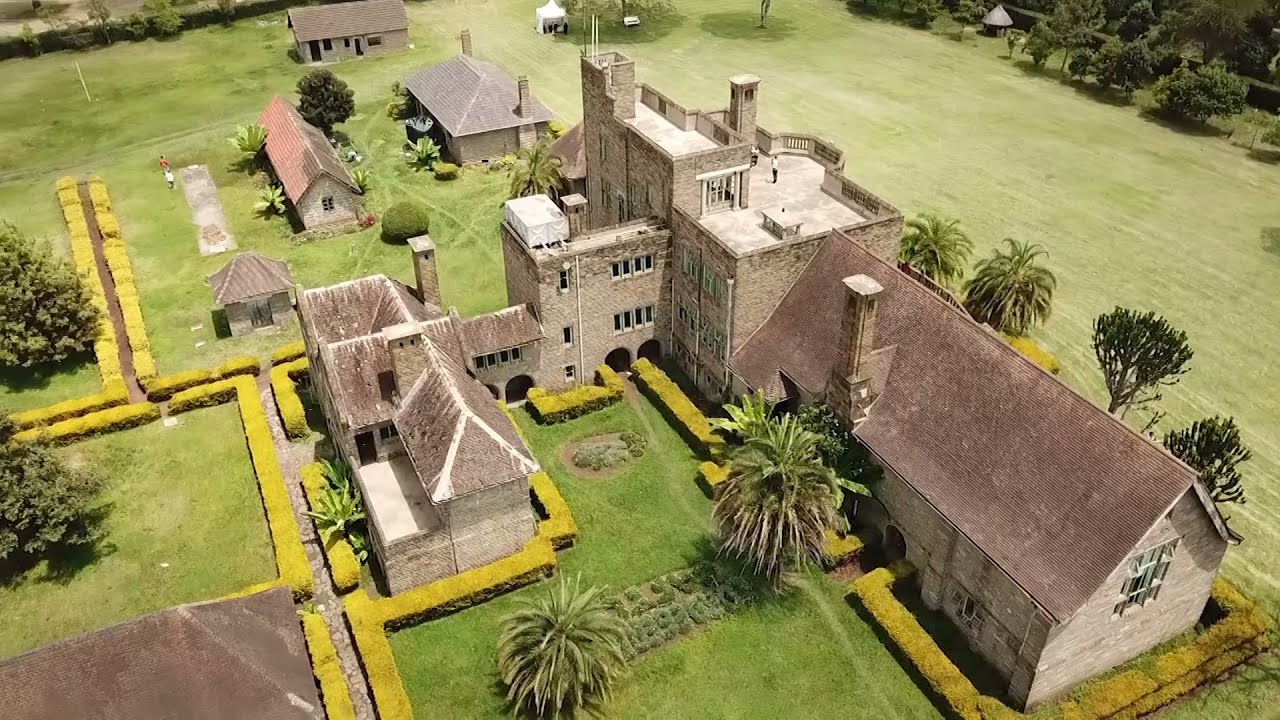
Lord Maurice Egerton decided to built a magnificent Castle on the outskirts of Nakuru town in the Ngata area as a means of courting a beautiful woman. Lord Egerton built the castle during the period he was courting Victoria, a stunning English woman he had the intention of getting married to her.
The lady turned down his marriage proposal because the house he was living in was not up to her standards. The Second World War prevented Maurice Egerton from finishing the mansion he started building in 1938 to impress the woman after she rejected his proposal a second time.
The work wasn’t finished until 1954 after a sixteen-year delay. Victoria refused to wed Mr. Egerton and flew to England, Lord Egerton was furious, felt betrayed and was devastated. He resolved never to interact with ladies again. His acquaintances and employees had to leave their spouses or girlfriends outside the gate whenever they wanted to meet Lord Egerton since he forbade women from entering his compound and home.
Lord Egerton specified in his will that the Agricultural College he created be transformed into a male-only institution. His desires were fulfilled for a while, but the Kenyan government was compelled to make a change due to the country’s lack of educational facilities.
Egerton University which he started has developed into one of the most esteemed universities in the country. Both the institution and the surrounding area bear his name. Lord Maurice Egerton spent four years living in the castle before passing away in 1958 at the age of 83.There were Eighty medical professionals and nurses in total the most of whom were British, cared for Lord Egerton. Today, the castle serves as a tourist destination.
Lord Egerton Castle was built to showcase wealth, with its spectacular architecture resembling a castle. The distance from the city of Nakuru is 14 km. This home has fifty-two rooms, including an entry hall, a wine cellar, a study, a dark room for photograph development, and a dance hall with an electronic organ. There is an old phone from which was from the previous era that is still in the castle.
Lord Maurice Egerton is a member of the royal dynasty of Lords, having been born to Alan de Tatton and Lady Anna Louisa Taylor. A well-known family where he was brought up with his two siblings. William, one of his brothers, was born in 1868, while Cecile, his sister, was born in 1871. Unfortunately, they both passed away when they were still young, leaving Lord Maurice Egerton as the sole heir to the enormous wealth.
He attended school in Britain during his first 10 years, and then he joined the British Royal Navy to continue in his father’s footsteps. By the time he was 45 years old, he had automatically inherited the family’s wealth following the death of his father in 1920.The Lord travelled across continents while engaging in the two pursuits that piqued his interest: photography and hunting. Lord Maurice Egerton entered Kenya in 1920 after travelling through Uganda, with Zimbabwe serving as his initial stop on the continent before moving on to Congo and Uganda.
The British government used to provide land as a token of appreciation to retired military officers during the colonial era. The castle is located in the Nakuru-Njoro region. He was encouraged to start farming by Lord Delamere. He later expanded his property by purchasing additional acres from Delamere in areas of Rongai, Ngata, Molo, Lake Nakuru, and the region that is now home to the current Egerton University.
In line with the British custom Lord Maurice Egerton had to wed a princess or a member of a royal family who was related to her. When Lord Egerton began courting an Austrian princess when he was 45 years old, he went so far as to build her a four-room home in an effort to impress her.
The lady was not happy when Maurice Egerton invited her to see it and left with no warning; this prompted Maurice Egerton to construct a larger house for his royal wife. Lord Egerton began building a palace in Ngata in 1938. He had Red Indian, Kenyan, and Italian labourers in addition to looking for the services of English architect Albert Brown.
When the Second World War broke out in 1945, the building was stopped. He brought Italian designers to the Castle and British building supplies into the country. The tiles used in the castle’s construction came from China, and the sparkling green marbles used in the fireplaces were brought from Italy.
The stones from Kinoo and Njiru were the sole locally produced materials used in the building’s construction. The castle’s interior walls, ceilings, and stairways were panelled with British oak. Also there is a two-story-tall cabinet housing a grand piano with 411 pipes. A large ballroom for events, meetings, and interactions that serves as the lobby for guests.
Inside the castle it is made up of confinements, obstacles, creative voids with extra partitions, bathrooms, a photo room, guest houses, a library, a kitchen, a reading room, a laundry room, a master bedroom, and a children’s room.
The woman rejected Lord Egerton’s attempts to win her over and make a marriage proposal. The woman travelled to Australia in 1954 and married a filmmaker who would later become Lord. Due to his damaged heart, Maurice Egerton developed a dislike of women. He posted notes on trees advising women to avoid his property.
Lord Egerton Castle Entry fee
| Citizens | Residents | Non Resident | |
| Adults | Ksh 150 | Ksh 450 | 12 USD |
| Tertiary institution | Ksh 120 | Ksh 240 | 10USD |
| Secondary schools | Ksh 100 | Ksh 200 | 8USD |
| Primary schools | Ksh 75 | Ksh 150 | 6 USD |
| Pre-School | Ksh 50 | Ksh 100 | 4 USD |
It is open every day from 7 am to 1 pm and from 2 pm to 5 pm.
For 38 years, Lord Maurice Egerton resided in Africa and was a significant contributor to Kenyan education. In order to prepare European settlers, he founded Egerton University, which is now among Kenya’s largest public universities. He passed away in 1958 and was buried in the Kenyan town of Nakuru.