
Ruaha National Park has a lot of lodging options for safari visitors in Tanzania. The wide variety of accommodations ranges from Luxurious, mid-range and Budget suiting every Tanzania safari visitors choice and preferences. These lodges, camps, and hotels are found inside and outside the park.
These accommodations in Ruaha National Park are well-designed to blend in with the natural environment. They come in a variety of forms, including lodges, bandas, hostels, and tented camps. The standards of these accommodations range from rustic luxury to mid-range and affordable budget options, and they all offer excellent value for money while offering the ideal experiences for a wild stay.
Luxurious accommodations
Jongomero Camp
A luxurious camp that offers genuine seclusion and an untainted experience of the African bush is Jongomero Camp. In the southernmost region of the Park, set back among the shade-giving Acacia trees, it offers unparalleled seclusion since it is far from all other camps. There’s a good chance that guests will see hippos splashing in the permanent water nearby or elephants strolling down the Sand River directly from the camp’s terrace.
Eight generously sized and luxuriously furnished tented apartments at Jongomero are situated along the riverbank, elevated on wooden platforms and topped with expansive thatched roofs that enclose a roomy private veranda. The term “tent” is insufficient to describe them; they are elegant and roomy. High-end furniture, polished wooden flooring, and thoughtful details abound to create an opulent atmosphere even in the middle of the bush.
Jabali Ridge
Set on a rocky outcrop overlooking the Mwagusi River and Ikuka escarpment, Jabali Ridge is a luxury camp in the animal-rich Ruaha National Park. The lodge features eight suites, including one private house, each with an en-suite bathroom, flushing toilets, and private outdoor lounges. It also features a swimming pool and spa.
When visiting Jabali in the rainy season, you can observe the Mwagusi starting to flow after it has been dry for seven months, as well as hear the thunderous lkuka waterfalls. Elephants searching for water in the sand and herds of buffalo in the riverbed can both be spotted during the dry season, which is equally thrilling.
Ruaha River Lodge
The only posh lodge in the Ruaha is called Ruaha River Lodge, and it is made up of 24 stone chalets that line the river’s edge. Every chalet boasts a spacious veranda with breathtaking views, as well as roomy interiors with a writing desk, sitting area, and twin or double bedrooms. Every chalet has a spacious bathroom with a shower, double sinks, and salvaged wood décor at the back.
Kigelia Camp
The chances of seeing game, particularly the big five, are extremely high at Kigelia Camp, which is situated on the Ifguru Sand River near the confluence of the Mwagusi River and the Greater Ruaha River. The camp is a small, luxurious camp with six spacious double tents that have private bathrooms and showers. Families and groups of eight or more people can reserve all six of the camp’s rooms at once. Eight-year-olds are also welcome.
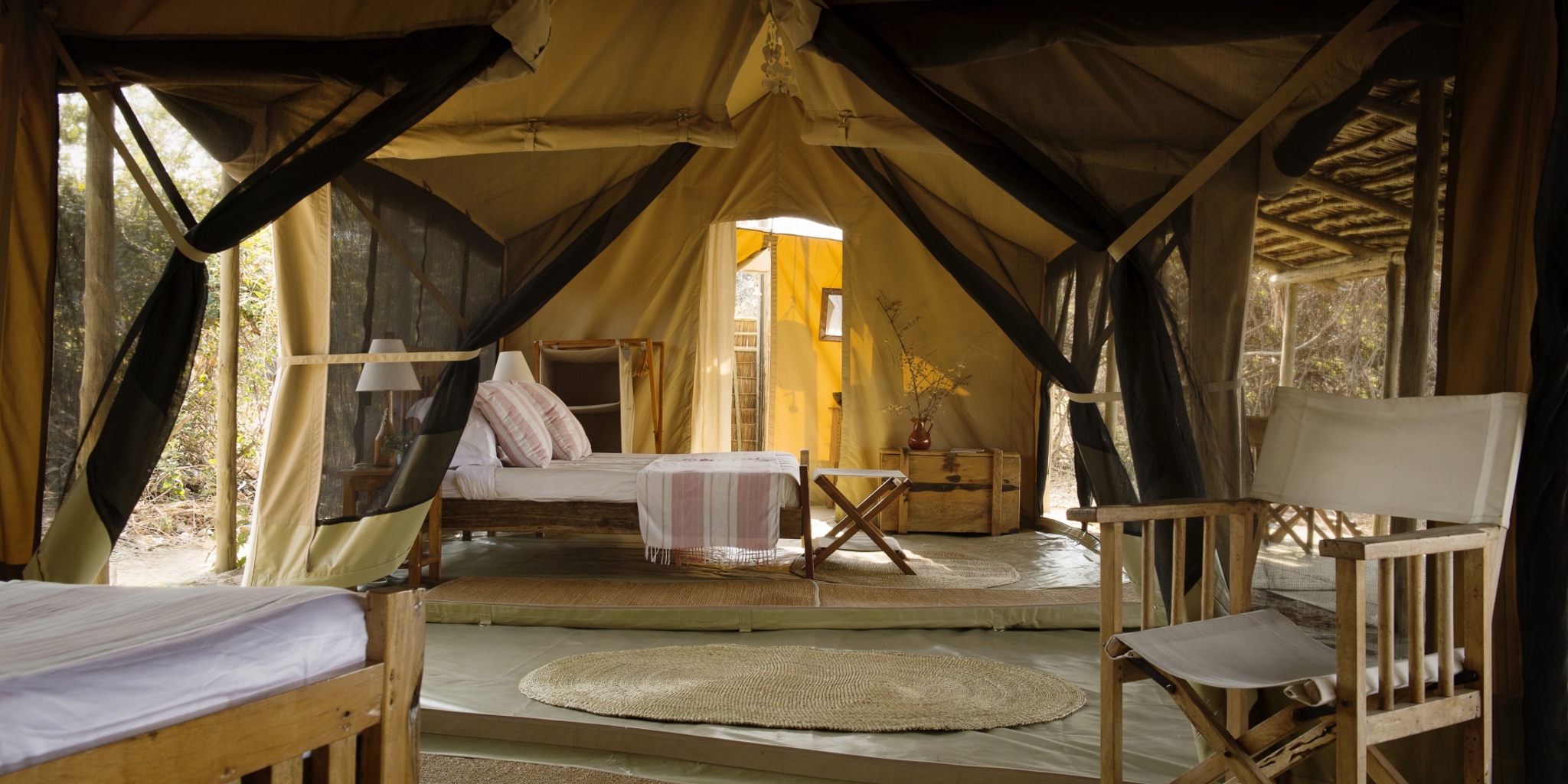
Some of the midrange accommodations
Kwihala tented camp
Kwihala Tented Camp, which is situated in the Mbagi area of Northern Ruaha, is a welcome blend of adventure and style. It is ideal for people who want to get a little bit closer to the wildlife. The camp is situated between the river and the best game driving circuits in Ruaha, just a 45-minute drive from the Msembe airstrip. With just six thoughtfully positioned tents, Kwihala Camp offers visitors a very private way to take in this amazing area.
Mid-range accommodation in Ruaha National Park
Ruaha Hilltop Resort
The mid-range resort Ruaha Hilltop Resort is situated atop a hill with an amazing panoramic outlook. Situated close to the edge of Ruaha National Park, the Lodge is 5 km from Tungamalenga hamlet and 100 km from Iringa along the main road connecting Iringa and Ruaha. Each of the cosy, private, self-contained cottages has a lovely outlook from its own balcony. Solar energy is used to heat the water. You may occasionally catch a glimpse of giraffes, elephants, baboons, and kudus when visiting Ruaha Hill Top.
Other Accommodation in Ruaha National Park
Ruaha River Campsite, Mdonya River Campsite, Kichaka Lodge, Ikuka Safari Camp, and numerous additional lodging options are available in Ruaha National Park. You have options like Sunset Mountain Lodge, Tandala Tented Camp, and Chogela Camp outside of the park.
Why should you visit Ruaha National Park?
Game viewing
Ruaha National Park is home to a number of significant species, including striped hyenas, sable and roan antelopes, crocodiles, hippos, greater and lesser kudus, ostriches, lions, zebras, and giraffes. Zebras, Hippopotamuses, Eland, Bat-Eared Foxes, Impala, Wildebeest, Gazelles, Giraffes, Topis, Sable Antelope, Roan, Greater Kudu, and many more.
Game viewing is very good at this park because you may watch the animals with ease throughout the year. The best time to watch animals is during the dry season, which lasts from June to October and then from December to February.
Birdwatching in Ruaha National Park
Ruaha National Park contributes to Tanzania’s high bird population. A few immigrants from outside and from Africa also reside in the park. There are several bird species found in the park, such as the secretary bird, Ruaha red-billed hornbill, lovebirds, splendid starlings, turaco, racket roller, pale-billed hornbill, egret, green-wood hoopes, kingfishers, violet-crested turaco, and many other birds. These are some of the most frequently sighted species.
The best time to go birding is from March to May and November. This is because the birds are breeding, although you can go birding any time of year. During this time, migratory birds from all over the world arrive at the park.
Historical sites
Tanzania safari tourists who visit the site of the park have a chance to interact with the local indigenous tribes that offer fantastic traditional entertainment. The best historical story in the area is about the valiant Chief Mkwawa of the Hehe people, who rebelled against German colonial control.
Following their victorious fight against the Germans, the Hehe tribe continues to enjoy greater popularity in that region of Tanzania. The history of the central region dates back to the Arab caravan era, when explorers such as Speke and Burton all travelled through this region.