
Uganda Vs. Rwanda : Which One Is The Best Safari Destination Worth Visiting? It can be difficult to decide between Rwanda and Uganda for your upcoming African Safari journey. Both countries are bursting with fascinating cultures, illustrious landscapes, and deep histories. Will you choose Uganda, known as the “Pearl of Africa,” for the variety of its indigenous communities? Or will you be drawn in by the captivating tapestry of Rwanda’s past and future?
Are you torn between Rwanda’s and Uganda’s wonderful experiences? Every place has a distinct cultural mosaic and a wealth of historical significance that may enthrall everyone. So how do you make a choice? Continue reading to explore the complex depths of these two intriguing locations.
HISTORY AND CULTURE: UGANDA VS. RWANDA
Examining the depths of their histories and cultures is necessary in order to choose between Uganda and Rwanda. Both East African nations have had turbulent histories, but they have emerged to become popular tourist destinations with interesting histories and stunning natural scenery. Let’s start removing the layers.
There are numerous tribal cultures in Uganda, each with its own distinct set of rituals and traditions. For instance, the Acholi and Lango populations are prominent in the north, while the Baganda people rule the middle region. These tribes’ tenacity throughout Uganda’s colonial past and subsequent political unrest is evidence of the country’s unflappable spirit.
Many of Uganda’s traditional dances, arts, and celebrations have survived, serving as living historical monuments.
On the other side, Rwanda is frequently connected to its tragic past, particularly the genocide that occurred there in 1994. But Rwanda is more than just its past tragedies. The nation has undergone a stunning transition that encourages harmony and peace.
In terms of culture, Rwanda is more homogeneous than Uganda is, with the Hutu, Tutsi, and Twa tribes having a great deal in common in terms of language and traditions. This shared culture has made it possible for Rwanda to concentrate on a single national identity, greatly assisting its recovery and advancement.
Uganda features a mix of Muslim and Christian communities, which adds another layer of depth to the country’s cultural tapestry. These religious backgrounds are frequently discernible in the country’s celebrations, architecture, and everyday life. Uganda stands out as a melting pot of many ideas and traditions because of its religious diversity.
In Rwanda, on the other hand, the majority of the population is Christian, and the country’s culture and public life are heavily influenced by this religion. Although Rwanda may not have as many different religions as Uganda, its post-genocide moral and ethical climate has been shaped in part by its strong Christian roots.
In conclusion, though in different ways, both Uganda and Rwanda provide rich and in-depth cultural experiences. With its many tribes and religions, Uganda creates a fabric of varied histories that come together to form a single, though complex, identity. Rwanda fascinates with its determined pursuit of unification, motivated by a common culture and an unbreakable character. Your decision will be based on the level of historical and cultural immersion you desire.
ATTRACTIONS AND ACTIVITIES: UGANDA VS. RWANDA
Are you prepared to delve deep into East Africa? Both Rwanda and Uganda have sites and activities that would delight any traveler with a sense of adventure. However, these two countries are different due to the nature of the activities and their distinct locations. Let’s go into the specifics of what to anticipate.
Uganda, dubbed the “Pearl of Africa,” is home to a wealth of natural treasures. The Bwindi Impenetrable National Park is a must-see destination where you may undertake gorilla trekking. You read that right—you can go ape-spotting! You will definitely remember this event forever.
The spectacular Murchison Falls, where the River Nile thunders through a tight valley to create an incredible spectacle, are also located in Uganda. With over 600 different species of birds, Queen Elizabeth National Park is a bird-watcher’s delight.
The “Land of a Thousand Hills,” commonly referred to as Rwanda, also delivers. The Volcanoes National Park, which provides its own unique gorilla trekking Safari experience, is Rwanda’s response to Uganda’s Bwindi. Along with this, Akagera National Park provides a distinctive safari experience where visitors may see creatures including zebras, lions, and elephants.
If you enjoy trekking, Mount Bisoke offers a somewhat difficult ascent that is crowned with a stunning crater lake.
White-water rafting on the Nile close to Jinja is a different sensation available in Uganda. The adrenaline rush is unmatched, and the rapids are of the highest kind. A boat tour on Lake Victoria, the second-largest freshwater lake in the world, is another option for admiring its natural beauty and spotting some unusual aquatic species.
In contrast, Rwanda has the exciting activity of a canopy walk at Nyungwe Forest National Park. Imagine yourself in the forest canopy, 50 meters (164 feet) above the earth, and wandering over the treetops. It’s both thrilling and peaceful.
In conclusion, anyone looking for adventure and a love of the environment will find great prospects in both Uganda and Rwanda. With activities like white-water rafting, gorilla trekking, and bird watching, Uganda skews more toward diversity. With distinctive activities like gorilla trekking and canopy walking, Rwanda competes on an equal footing. What appeals to your sense of adventure is what matters.
FOOD, BEVERAGE, AND NIGHTLIFE: UGANDA VS. RWANDA
Are you in the mood for some delectable cuisine or a refreshing beverage? Maybe you’re a night owl looking for some activity after dark. Both Uganda and Rwanda have distinctive cuisines and nightlife scenes when it comes to eating, drinking, and entertainment. Let’s dissect it.
The gastronomic environment in Uganda is as varied as its populace. You’ll never run out of alternatives, from basics like matoke (mashed bananas) and groundnut sauce to meaty skewers called “muchomo.” Quick meals like “Rolex,” a rolled-up Chapati with eggs and veggies, are sold by street vendors.
A journey through different cultural influences, such as Indian and Arab, is essentially what a cuisine tour in Uganda entails.
The food in Rwanda is frequently less complicated but no less wonderful. The scene is dominated by dishes like “Akabenz,” which is fried pig, and “isombe,” which is cassava leaves with palm oil and peanuts. A delightful selection of fresh fruits, like avocados and passion fruits, are also available in Rwanda, enhancing the dining experience.
Beer enthusiasts will find a haven in Uganda when it comes to drinking. Ugandans are proud of their homegrown beverages, like Bell Lager and Nile Special. Traditional fermented drinks like malwa, also known as “Ajone,” are also preferred by many people, especially in rural regions.
With renowned beer names like Primus and Mutzig, Rwanda isn’t far behind. However, for a different kind of kick, Rwanda also has a distinctive native banana wine called “urwagwa,” which is worth tasting.
The nightlife in Uganda is fairly lively, especially in big towns like Kampala. Live music venues, dance clubs, and bars are open well into the night. The nightlife in Rwanda is less vibrant but developing, especially in Kigali, where rooftop lounges and jazz bars are popular locations to unwind.
In conclusion, Uganda offers a diverse dining experience with influences from several cultures, but Rwandan food is easier to understand and simpler. Both nations have distinctive alcoholic beverages, with Rwanda having both beer and banana wine and Uganda leaning more toward beer. If having a bustling nightlife is important to you when traveling, Uganda might be a better choice for you than Rwanda, which has a more relaxed atmosphere.
SHOPPING: UGANDA VS. RWANDA
Want to bring a souvenir of your trip home? Shopping in Uganda and Rwanda may be enjoyable, as each nation has a wide selection of distinctive goods and souvenirs to choose from. Compare the two now.
The craft markets in Uganda are renowned for having a wide variety of handcrafted goods. These include wood carvings, beaded necklaces, and finely crafted baskets. You must go to Kampala’s Owino Market, a thriving center where you may purchase colorful Kitenge fabric. Don’t leave Uganda without picking up some Robusta beans, which are local to the country.
On the other hand, Rwanda is a fantastic location to get handcrafted goods with a modern twist. The Caplaki Craft Village in Kigali is a refuge for this, featuring hand-painted crafts, distinctive ceramics, and woven baskets with modern designs. You may discover some of the highest-quality tea leaves to bring back home in Rwanda, which is also well known for its tea.
Prepare to haggle for the best deal in the local markets in both nations since they both offer them. Cash is still king, even though credit cards are increasingly accepted, especially in smaller markets and rural areas.
Markets and retail centers in Uganda are typically more dispersed and may involve some travel in terms of accessibility. The markets in Rwanda are more concentrated, especially in and around Kigali, so you can find what you’re searching for faster.
In conclusion, Uganda is a haven for coffee enthusiasts and offers a variety of traditional crafts. Rwanda excels at providing contemporary takes on traditional goods and is a sanctuary for tea lovers. Both nations offer distinctive shopping opportunities that will fill both your bags and your hearts.
ACCOMMODATION: UGANDA VS. RWANDA
Choosing a place to stay might be just as crucial as choosing a destination. Both Uganda and Rwanda provide a variety of lodging choices to meet various preferences and price ranges. Now let’s get into the specifics.
Options abound in Uganda, ranging from low-cost hostels to five-star luxury resorts. You can even discover eco-lodges close to national parks, such as Bwindi Impenetrable National Park, if you’re an adventurer. These lodges frequently provide activities and guided tours, giving guests a chance to fully explore Uganda’s diverse wildlife.
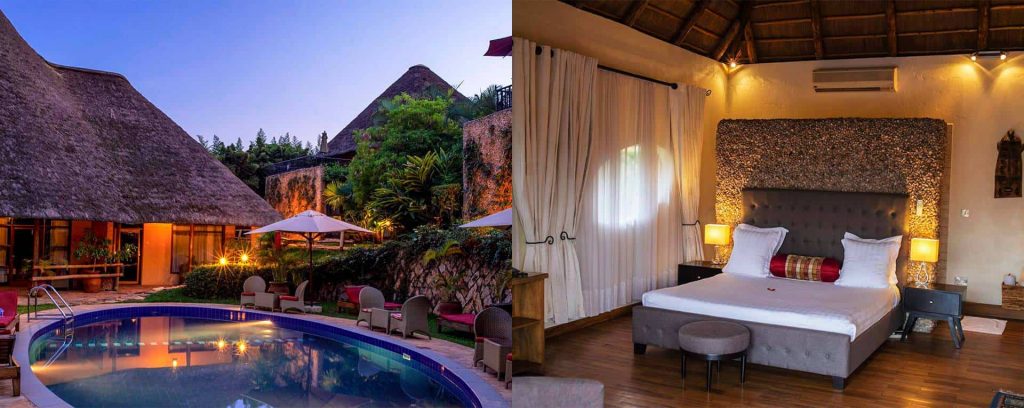
The country of Rwanda, commonly known as the “Land of a Thousand Hills,” offers a wide variety of accommodations. The city of Kigali provides up-to-date hotels with all the standard features, such as Wi-Fi and swimming pools. For easy access to gorilla trekking while visiting the renowned Volcanoes National Park, choose a lodge close to the park.
Boutique hotels that embody the cultures of both nations are available. While Rwandan hotels frequently use contemporary design features, you could discover Ugandan facilities decorated with handcrafted items from the region.
In conclusion, Uganda offers a wider variety of lodging choices, capitalizing on the country’s varied topography, which ranges from crowded towns to pristine wilderness. If you’re interested in seeing Rwanda’s national parks, the country offers a unique combination of modern luxury and unspoiled beauty. Both nations provide distinctive housing options that can satisfy both those on a tight budget and those seeking a little luxury.
FAMILY-FRIENDLY AND KIDS’ ACTIVITIES: UGANDA VS. RWANDA
Taking a family vacation? Both Uganda and Rwanda provide activities that will keep kids entertained and interested. Explore now.
Uganda is notable for having numerous national parks with a variety of animals, including Queen Elizabeth and Murchison Falls, where families may go on safari to see the “Big Five.” Children may find excitement during boat journeys on the Nile. The indigenous flora can be experienced firsthand at educational facilities like the Uganda Wildlife Education Center.
Despite its diminutive size, Rwanda has a lot to offer in terms of family-friendly activities. For older kids, the Kigali Genocide Memorial provides an engaging educational opportunity. Younger children can participate in a range of games and activities at the Adventure Park in Kigali.
Both Uganda and Rwanda provide family-friendly community outings where participants can interact with regional customs and crafts. These provide a healthy blend of pleasure and learning, in addition to being entertaining.
In conclusion, families will find a variety of educational and adventurous adventures in both Uganda and Rwanda. Rwanda provides a mix of history and exciting activities, while Uganda leans more toward the wildlife experience. Both locations rank well for safety, which makes them good choices for family holidays.
GETTING THERE AND GETTING AROUND: UGANDA VS. RWANDA
The mechanics of getting to and moving about in your ideal location are quite important. Let’s contrast Rwanda’s and Uganda’s transportation choices.
Most visitors to Uganda arrive by air through Entebbe International Airport, which is located about 41 kilometers (25.5 miles) from Kampala, the country’s capital. Kigali International Airport, which is just around 12 kilometers (or 7.5 miles) from Kigali’s city center, serves as Rwanda’s main international entry point.
Once you’re in Uganda, you have a selection of transportation alternatives at your disposal. For short trips, boda-bodas, or motorbike taxis, are a common option. Minibuses called “matatus” are frequently utilized for longer journeys. Additionally, Uganda has a larger road system, making self-driving an option if you’re up for an adventure.
The two main forms of transportation in Rwanda are minibuses and motorbike taxis. Bike taxis are an extra option in Rwanda, particularly in rural areas. Additionally, the nation’s roadways are better maintained and traffic laws are properly followed, making navigation considerably simpler.
In conclusion, Rwanda’s Kigali airport is closer to the capital than Uganda’s Entebbe airport. Once inside the nation, Rwanda offers a more structured, albeit constrained, range of transportation options, whereas Uganda offers a more varied selection with less strictly enforced traffic. You’ll find a method to get where you need to go regardless of the transportation systems in the two countries, which each have their advantages and disadvantages.
WEATHER: UGANDA VS. RWANDA
Let’s see what the weather is like in Uganda and Rwanda, since the weather can make or break a trip. Despite the fact that both nations are close to the equator, the weather in each one differs sufficiently to have an impact on your travel arrangements.
The two dry seasons in Uganda typically last from December to February and June to August. Temperatures during these months can range from 16°C to 28°C (60°F to 82°F). The wet seasons typically last from March through May and from September through November. Showers and lovely scenery can be found at this time.
There are two dry seasons in Rwanda as well; however, they only last from June to September and January to February. Typically, the average temperature is around 75°F (24°C). The high altitude of Rwanda results in a slightly milder environment, especially at night.
Similar to Uganda, their wet seasons are from March to May and from October to December, but because of their topography, they have a larger likelihood of rain.
There are particular times of day that are best for observing wildlife in both nations. While the dry seasons are ideal for safaris in Uganda, the greatest months for gorilla trekking in Rwanda are frequently June through September.
To sum up, tropical climates with distinct dry and wet seasons are available in both Uganda and Rwanda. Rwanda tends to be a little cooler due to its greater altitude, but Uganda is often warmer. Depending on the time of year you visit, both nations provide chances to engage in outdoor sports.
SAFETY: UGANDA VS. RWANDA
Travelers’ first concern is safety. Both Uganda and Rwanda have a reputation for being comparatively secure nations, but there are key distinctions to be aware of.
In general, travelers are thought to feel safe visiting Uganda, particularly in the busiest towns and tourism hubs. Pickpocketing and other small-time crimes do occur, although they are not common. Avoid going on a nighttime stroll alone, and always be cautious of your surroundings.
Additionally, Rwanda is renowned for its crime-free neighborhoods and clean streets. Petty crimes can happen, although they don’t happen as frequently as in Uganda. The tougher laws and regulations in Rwanda add to the country’s overall safety.
Rwanda does not require a yellow fever vaccination for entry, although Uganda does for health and safety reasons. But since both nations are in malaria-prone areas, it makes sense to take precautions.
Although they are uncommon, natural hazards like landslides in Uganda and volcanic activity close to Rwanda’s Virunga Mountains do present threats. During your visit, it’s a smart idea to stay current on the local news.
In conclusion, Uganda and Rwanda both have low crime rates and offer generally secure travel. However, Rwanda has a tiny advantage in terms of safety due to its tougher restrictions. In both nations, health measures are required, and it is advisable to be aware of uncommon natural hazards.
COST: UGANDA VS. RWANDA
Understanding the pricing variations between Uganda and Rwanda can be useful when planning your travel budget. For any style of traveler, both nations provide a variety of possibilities, but prices vary noticeably.
A decent supper in an average restaurant in Uganda can cost as much as 50,000 Ugandan Shillings, or around 13.50 US dollars. While lodging costs typically range between 70 and 80 US dollars per night, in this example for a 3-star hotel, depending on the type and location, Local taxis may be flagged for 3,000 Ugandan Shillings, or around 0.75 US dollars, making transportation also reasonably priced.
In general, Rwanda is more expensive. An average supper in a midrange restaurant will probably set you back about 16,000 Rwandan Francs, or about 13.50 US dollars. During the busiest times of the year, hotel rates in Kigali and the surrounding areas can range from 100 to more than 2000 US dollars per night.
Local transportation is also more expensive, costing an average of 5,000 Rwandan Francs (about $4.25 USD) for a distance of more than 0.5 miles (1 km). Both nations provide guided tours for excursions like gorilla trekking and Game drive safaris. These can cost up to $1,500 USD in Uganda. Similar experiences in Rwanda typically begin at the same time.
In conclusion, Uganda seems to be the more affordable alternative, even though both Uganda and Rwanda provide a variety of options for food, housing, and transportation. A more sophisticated experience is available in Rwanda, although it is more expensive. Both nations provide something for every budget, depending on what you’re looking for.
WHICH IS BETTER, UGANDA OR RWANDA?
You’ve now had a chance to learn more about these two adjacent countries, which are both rich in culture, the natural world, and experiences. In order to assist you in making an informed choice for your next journey, let’s review what makes each unique.
Both Rwanda and Uganda have rich cultural traditions with distinctive histories. With its numerous tribes and languages, Uganda provides a varied range of cultural experiences. Despite its limited size, Rwanda has a strong sense of community and advancement, especially given its tragic past.
Both countries offer in-depth knowledge of Africa’s complex past and present, but the kind of cultural interaction you desire can tilt the balance.
If you’re interested in a variety of wildlife and natural settings, Uganda wins in terms of attractions and activities. Despite its little diversity, Rwanda has one special attraction that might be life-altering: gorilla trekking. Your decision here will depend on whether you prefer a broad experience or a narrowly targeted one.
Both countries are not recognized for their conventional sandy beaches, but Uganda has lakeside locations that can satisfy your desire for sand and sun. However, Rwanda is better known for its beautiful, mountainous terrain than for this.
Uganda offers a broader selection of dining, drinking, and entertainment alternatives, including both local and international cuisines and a bustling nightlife. Despite having fewer options, Rwanda offers a more premium experience, particularly in its capital, Kigali.
Uganda provides a wide range of lodging options, from inexpensive to luxurious, making it suited for all types of tourists. Rwanda tends to favor upscale accommodations. This might make or break it for you, depending on your budget.
Your primary priorities should be family-friendly activities and ease of travel; Rwanda’s small size makes it simpler to navigate, and its general safety makes it slightly more family-friendly. Despite being larger and requiring more travel time between attractions, Uganda has a greater selection of things to do that may amuse a family.
In conclusion, Uganda provides a more varied and affordable Safari experience, making it appropriate for individuals who prefer a wide variety of activities and places. On the other side, Rwanda is for people looking for a more concentrated, upscale, and safe setting. Which location offers the adventure you’re looking for will ultimately depend on your particular choices for activities, your spending limit, and your travel style.