
A Complete Guide To The Kenya Horseback Riding Safari : In The 1970s, The Idea Of A Horseback Safari Was Generated In Kenya. A Hugely Popular Way To Experience Safari And Get Up Close To Africa’s Wildlife Is A Horse Riding Holiday In Kenya.
Kenya now offers one of the world’s most thrilling horseback riding vacations. With unmatched game viewing as well as the opportunity to ride a horse alongside the largest herds of zebra and wildebeest in Africa while they are migrating. Both lodge-based and conventionally luxurious mobile tented-camp horse safaris are available in Kenya. The lodging looks like it was taken straight out of the “Out of Africa” set. As a result, every last detail has been considered, making this the pinnacle of luxury in Africa. Immerse yourself in the African wilderness and experience it on a personal level while enjoying all the wonderful creature comforts. A horseback riding vacation in Kenya may be expensive, but trust us when we say its money well spent.
HORSE RIDING KENYA
Kenya offers unmatched opportunities for horseback riding as the birthplace of the African horse safari. The nation offers a wide range of safari experiences, including fly-camping, dining under the stars, and stays in opulent, high-end lodges. Choose between scaling the steep rocky outcrops in the high country of Laikipia or riding through the vast open plains of the Masai Mara. If you want to have the best safari experience, you could even combine the two!
A riding safari in Kenya is most well-known for giving visitors the opportunity to ride alongside the famous wildebeest migration. Imagine galloping next to and navigating through enormous herds of zebra and wildebeest as they move from the Serengeti to the Masai Mara. The entire cast of The Lion King is present, and there is wildlife everywhere you turn in the long, rolling savannah!
But horseback riding in Kenya extends beyond the Masai Mara. In Laikipia, grin at the thriving wild dog population and its puppies, and gasp as Mt. Kilimanjaro breaks through the clouds in the Chyulu Hills. Kenya offers a wide range of experiences, from the vast Mara plains to mountainous areas further north. There is something for everyone, including riders and non-riders, families, couples, groups, and lone adventurers. The more open landscapes make it less likely that you will encounter wildlife by surprise, making it suitable for families and intermediate riders. You will enjoy the best that Kenya has to offer while on a horseback safari, sitting in the best position possible!
SAFARI, LANDSCAPE, AND WILDLIFE
Laikipia, the Masai Mara, and the Chyulu Hills are the three main locations in Kenya where you can go mountain climbing. Mt. Kenya, the second-highest peak on the continent, is located in Laikipia. Here, as you ride through the high terrain, you’ll be met with breathtaking views of the mountain. From the saddle, observe threatened plains animals like the Jackson’s Hartebeest, Grevy’s Zebra, Gerenuk, and Reticulated Giraffe. Over the past few decades, local communities have been deeply committed to protecting both black and White Rhinos.
It’s likely that you will feel exhilarated while watching predators from a horse in the Masai Mara. From the saddle, you can frequently see lions, and if you’re lucky, you might also see cheetahs and leopards. You will always be kept safe by extremely qualified guides (and horses)—it is an adrenaline rush unlike any other!
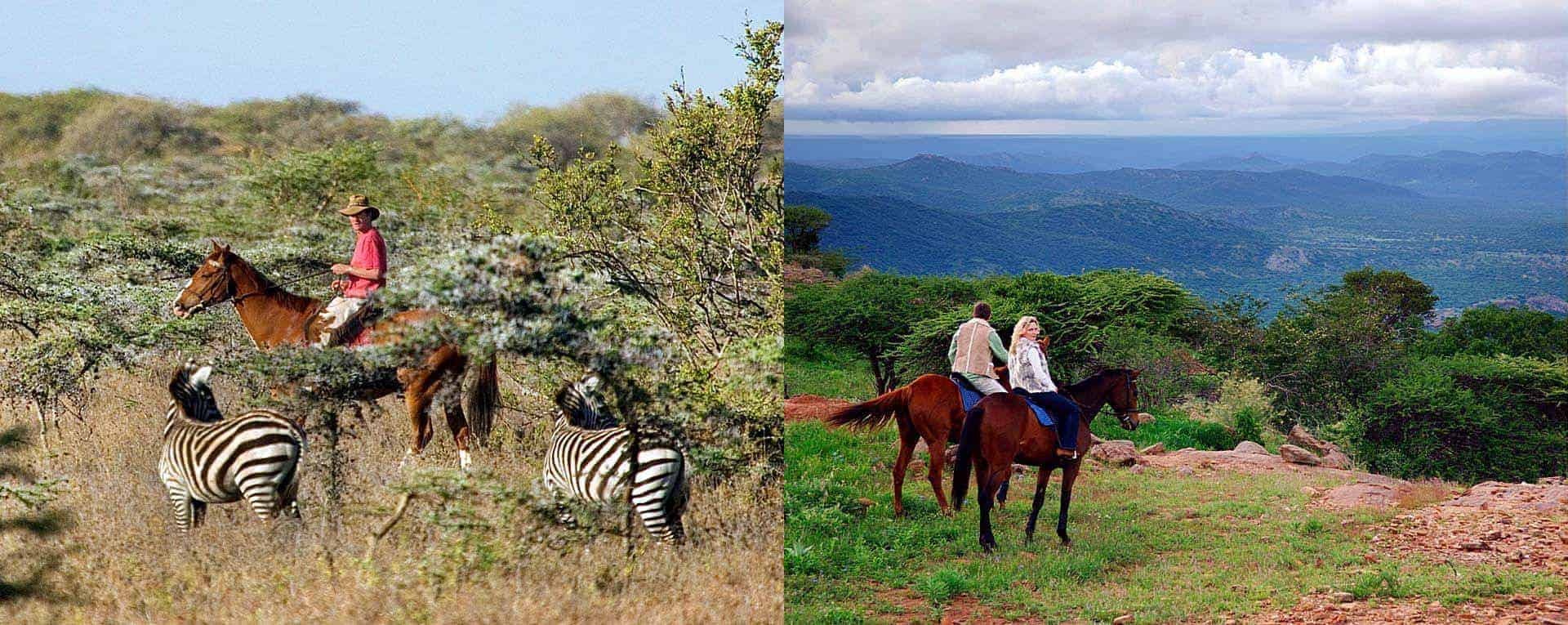
The Chyulu Hills, which run between Tsavo West and Amboseli, are home to stunning and varied landscapes. The largest and most impressive Tusker Elephants still in existence can be seen while riding a horse against the backdrop of Mount Kilimanjaro.
CULTURE
It is a delight to experience Kenya’s vibrant, colorful, and fascinating culture while on safari. Enjoy combining the Maasai tribe’s fascinating traditional culture with some of the best game viewing opportunities that Africa has to offer. Visit a Maasai boda to learn from the illustrious Maasai warriors while taking a break from the saddle. They will be pleased to demonstrate to you their culture’s customs and how they manage to live and herd cattle in a Big 5 environment!
Be motivated by the dedicated anti-poaching teams defending their priceless and increasingly endangered black and white rhinos. Riding safaris in Kenya contribute to the funding of these initiatives and serve as motivation to continue the fight for their preservation.
ACCOMMODATION
There is truly an accommodation to suit everyone when it comes to where you lay your head after a day of horseback riding. On one of our lodge-based horseback riding vacations, unwind in luxury after spending a lot of time in the saddle. Alternately, select the ‘Out of Africa’ experience for the finest luxury mobile horse safari. Despite being a mobile camp, you will have comfortably furnished tents and food that was prepared over a real fire rather than a simple one, as you might expect in a five-star hotel.
KENYA HORSEBACK RIDING SAFARI: FAQS
When is the best time for a safari in the Masai Mara?
The migration is said to coincide with the best game viewing between July and September, making it a must-do adventure! However, no matter when you go, you will never be dissatisfied because there are amazing wildlife sightings all year! Most people stay away from March and April because of their reputation for having frequent downpours and opt to travel outside of peak season when there are fewer tourists and prices are lower.
Will I see the wildebeest migration on horseback in the Masai Mara?
Since millions of animals are migrating constantly in accordance with the cycles of nature, it is impossible to know where they will be at any given time. As the wildebeest migration path crosses the riding route, you might get to experience the magic of riding among the herds—a surreal feeling you won’t soon forget! We advise adding a few days to a game drive safari so you can devote more time to this and travel farther if you are set on seeing the life-threatening river crossings.
Do I need a yellow fever vaccination for Kenya?
You might be asked for a vaccination certificate upon arrival or when traveling to other African nations because Kenya is regarded as a Yellow fever-risk country. Lifelong protection is provided by the Yellow Fever vaccination, which is administered as a single injection at least ten days before travel. Before you travel, we strongly advise speaking with your doctor or stopping by a travel clinic.
Do I need a visa for Kenya?
A valid passport with two blank pages is necessary for traveling to Kenya, as is a visa. Although it is currently possible to obtain a visa upon arrival, it is recommended that you do so online prior to your trip. It is very easy to apply for these up to a week prior to departure. Before you travel, inquire with the Kenyan embassy in your country about visa requirements, as they are subject to sudden change.
What if I have dietary requirements?
If you make the request well in advance, the majority of dietary needs can be accommodated. You must keep in mind that many safaris take place deep within the African bush, making it impossible to stop by a nearby store or restaurant. When you book your safari, please let us know if you are commemorating any birthdays or anniversaries, because we enjoy being a part of special occasions.