
Explore the Tanzania Coasts : For any traveler wishing to explore unique scenes from wildlife, beaches, natural wonders and mountain climbing, Tanzania is a splendid destination. This fabulous country is endowed with spectacular natural wonders which attract about thousands of visitors per year. After a stunning wildlife adventurous Uganda safari, you can relax and chill on the idyllic white-sand beaches along the coastline of Tanzania.
Tanzania is bordered by the majestic Indian Ocean in the east. The blue azure color of this ocean decorates the coastline making it a fantastic place to relax. Mountain climbers can relax in the beach after finishing their incredible trek in highest mountains like Mt. Kilimanjaro, Mt. Meru and many others, Explore the Tanzania Coasts.
Tanzanian coastline harbors many attractions for anyone interested in exploring these intoxicating things. Tanzanian coast stretches from Kenya in the north to Mozambique in the south with about 1424 kilometers long. Tanzanian coast can divided into northern coast and southern coast. North coast includes Tanga, Pangani and Bagamoyo and south coast includes Dar es Salaam, Kilwa, Lindi and Mtwara.
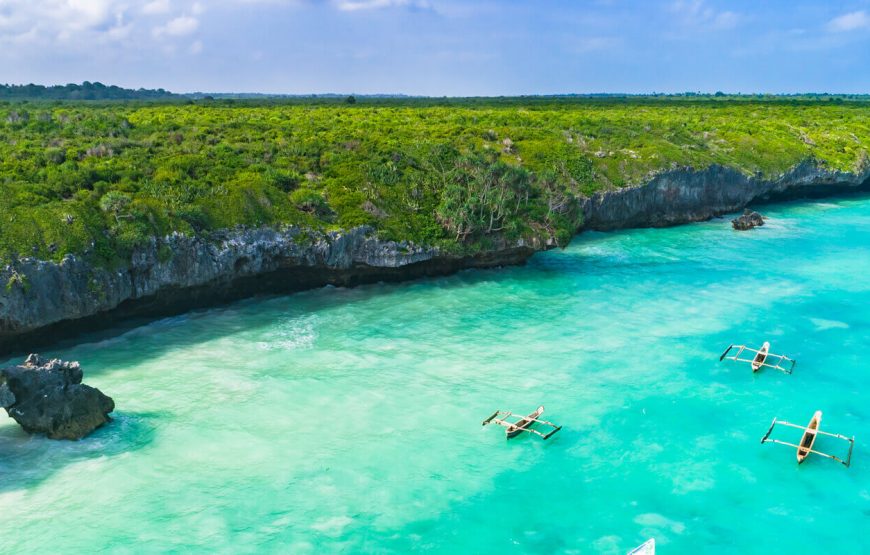
Tanzanian coastline is merely a combination of historical, wildlife, cultural and white sand beaches life making a must-see place in Tanzania. Glorious islands and islets like Zanzibar islands, Mafia, Pangani, Pemba and about over 70 islands found in the mighty Indian Ocean compliments this coast. If you are planning a safari to Tanzanian coastline, here are few breathtaking attractions for you;
Saadani National Park. Established in 2002, this park offers unparalleled experience of combining the wildlife adventures with beach life. This magical park covers about 430 square miles. It is located in the northern coast of at about 60 miles northwest of Dar es Salaam and about 60 miles southwest of Tanga port. This is the only wildlife sanctuary in East Africa bordering the Indian Ocean. This majestic park is situated close to the Saadani village, a Swahili fishing village with about 2000 inhabitants. You will begin your day with the scenes of amazing animals and bird species. Such animals include warthogs, sable antelopes, reedbucks, common waterbucks, greater kudus, buffaloes, red duikers, yellow and velvet monkeys, elephants, hartebeests, wildebeests and black-backed jackals. You can go for a morning or afternoon game ride for observing impressive animals and use you evening time chilling on clean sandy bush beach. Exotic birds are resident to this magnificent park especially in the riverine forest along the mighty Wami River. Over 250 bird species can be spotted in this park some of which are the wonderful marine and riverine birds. Lesser flamingo, mangrove kingfisher and many others make Saadani National Park a best-kept secret for birders. Guided walks along the natural and riverine forests exposes you to uncountable species of small animals and insects like hyraxes, butterflies and mice. The mighty Wami River is a dazzling place for canoeing. Hippos and crocodiles are usually spotted in this river. Boat safaris in the Indian Ocean are done with other water sports like sport fishing, snorkeling and swimming. If you are interested in visiting this outstanding park plan your trip between January and February as well as June and August.
Bagamoyo town. The word “Bagamoyo” means “bury my heart”. This town has historical and cultural significance in East Africa. If you want to observe how the ancient architectural designs and buildings looked like Bagamoyo is a hidden gem for you. Bagamoyo was a significant trading port in the East African coast. The most traded commodities were ivory and slaves. Caravans from Lake Tanganyika and other mainland regions arrived there with ivory and slaves before being shipped to Zanzibar. After the imposition of German colonialism, this town was coined as a German East Africa Capital. Bagamoyo town is home to many incredible attractions including Kaole ruins, German Boma and The Ancient Church in East Africa.
Kaole ruins. A visit to these oldest remnants of the Islamic mosque would be sensational. These ruins are said to be built in the 13th century by the Arabs after their arrival in East Africa.
German Boma. As I said earlier, Bagamoyo town was made a capital for the German rule. The German built this State House in 1897. There are a lot of things to know about in this boma. Your visit to this place will be fantastic and unforgettable.
The Ancient Church in East Africa. The history of Christianity in East Africa is symbolized by this iconic building. It was built in 1872.
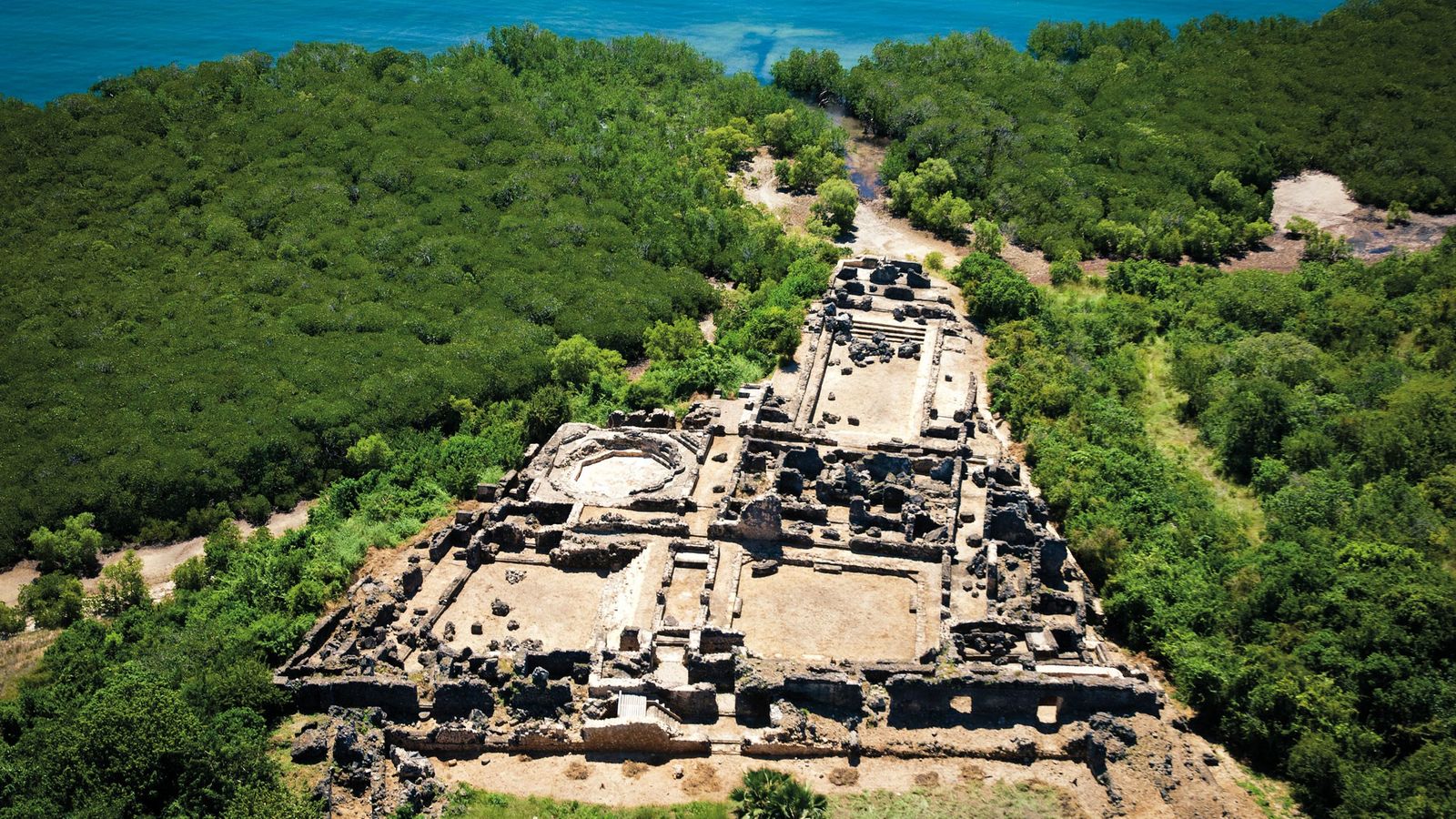
Kilwa Kisiwani. This is an authentic historical site along the Tanzanian coastline. It is one of the earliest cities to be visited by the famous traveler Ibn Battuta. This Muslim traveler stayed in Kilwa Kisiwani in 1331 and 1334. He described this island as one of the iconic cities at that time. After losing interest from modern civilization, Kilwa has remained to be a historical site and cultural heritage. This the reason why the UNESCO coined the two sites, the Ruins of Kilwa and Ruins of Songo Mnara as World Heritage Sites in 1981.
Historical background of Kilwa Kisiwani
Kilwa Kisiwani was built by a mixture of foreigners including Arabs, Portuguese, German and British. It minted its own currency at around 11th and 14th centuries. This came after being a major trading centers for Oman, China and Persia, the modern Iran. Most traded goods were sliver, perfumes, Persian faience, carnelians and Chinese porcelain. These were traded for commodities like gold, silver and ivory, Explore the Tanzania Coasts.
Oldest remains of mosques and forts are found there. In these buildings, Chinese porcelain and Persian artifacts remains to be symbolic representation of the existence of the trade between Kilwa and Chinese and Persians. The Great Mosque of Kilwa was largest religious building in East Africa said to be built in 11th century. This gigantic mosque was built by Sultan al-Hasan ibn Sulaiman, the ruler of Kilwa Kisiwani at that time.
Makutani palace is another majestic building built in 1516 where the ruler of Kilwa Kisiwani (sultan). Its architecture design is a state-of-the-art. Its rooms and bathrooms are decorated with ceramics, Explore the Tanzania Coasts.
Portuguese Fort is another attraction in Kilwa Kisiwani. You will walk around this oldest building.
Marine Parks. Tanzania have special parks in the Indian Ocean for preservation of marine animals and coral reefs. Marine Parks are controlled by Marine Parks and Reserves Unit. When you visit Tanzanian coast, you will have an opportunity to interact with such must-see parks. They include Mafia Island Marine Park, Mnazi Bay Ruvuma Estuary Park and Tanga Coelacant Marine Park.
Mafia Island Marine Park. This is one of the well-known destination for divers and other water-related activities. This park has a total area of 822 square kilometers. Several attractions found in this park include over 380 fish species like whale shark, coral reefs, marine mammals like Humpback whales and migratory sperm whales, beach, sea turtles, and historical site. This outstanding marine park is wonderful for fishing, snorkeling, boat and canoeing. Turtles have their breeding site within this park. A visit to this site is an unforgettable.
Mnazi Bay Ruvuma Estuary Park. This park is home to over 400 fish species, over 250 species of hard coral and 100 species of echinoderms. Fishes reproduce quickly in the mangrove forests found in this park. The park is endowed with dozens of attractions. These include over 400 fish species and coral reefs (over 250 species). Marine mammals found in this park include four species of dolphins i.e. Indo-Pacific dolphins, humpback dolphins, spinner dolphins and bottlenose dolphins. Other mammals include humpback whales, hippos and sperm whales. The park is also home to stunning bird species like shorebirds, waders and crab plovers.
Tanga Coelacanth Marine Park. Famously known for discovery of the coelacanth (Latimeria chalumnae) in 2003, this park is breathtaking destination for eco-tourists. Coelacanth is a rare old four-legged fish. Other attractions found in this park include clean sandy beaches, fish, coral reefs, sea grass beds, marine turtle and mangrove forest to name a few.
Swahili Culture. This culture is practiced by the Swahili people along the coastline of Tanzania. The Swahili language is mainly spoken along this coastline. It is a mixture of different languages including Bantu, Arabic, Portuguese, German and other languages. Swahili people are polite ones with a mixture of cultural values and Arabic traditions. They are charming and are happy to have you as their visitors. Females wrap “khangas” while males wear “kanzu” and Muslim hats.
Pangani. This is another small historical town in East Africa’s coast at about 50 kilometers south of Tanga. This town was once a trading port. This town brings together the Arabic, German, Asian and British culture. Pangani has a lot to offer including boat trip to Maziwe Marine Park, historical tour, village tour, visiting green turtle experience and cycling tours. Pangani River which carries water from Mt. Meru and Mt. Kilimanjaro to the Indian Ocean is another stunning attraction in Pangani. The inhabitants of this island are the Wazigua who practice Islamic religion. They are so welcoming to visitors, Explore the Tanzania Coasts.
As a matter of fact, Tanzanian coastline is a splendid place for exploring cultural and historical sites left by ancient administrators like Arabs, German, Portuguese and British. This coastline is worth a visit for every safari-goer.