
Largest National Park in Tanzania : Prior to the formation of the new Nyerere national park, the Ruaha national park, with its 20,226 square kilometers, was Tanzania’s largest national park. Currently, Nyerere National Park, which was founded in 2019 and has a total area of 30,000 square kilometers, is Tanzania’s largest national park, as well as the largest national park in all of East Africa and one of Africa’s largest national parks. The Nyerere National Park is said to be larger than 70 countries on the globe and is twice the size of Costa Rica (Central America) and roughly twice the size of Belgium (Europe).
Nyerere National Park is a newly founded park that is part of what was previously known as the Selous Game Reserve and is located in south-eastern Tanzania. The park was developed after the Selous Game Reserve was split up into the Nyerere National Park, which had an area of roughly 50,000 acres. The park is named after Tanzania’s founding father, the late Mwalimu Julius Kambarage Nyerere, the country’s first president.
The park was founded in 2019 and spans a total area of more than 30,000 square kilometers. Nyerere National Park is Tanzania and east Africa’s largest wilderness area, featuring relatively undisturbed ecological and biological processes, as well as a varied range of wildlife and strong predator-prey interaction for photographic safaris. The Rufiji River, with its renowned hippo and rhino population, drains into the Indian Ocean. In Nyerere National Park, the river has been recognized as a photography zone and is a popular tourist attraction. Elephant, buffalo, and lion numbers are up in the park, along with the rest of the Selous game reserves, is the last true bastion for African wild dogs. Visitors to this large park will be able to participate in the widest range of safari activities, including motorboat safaris, conventional game drives, walking safaris, and legendary fly-camping expeditions.

THE PARK’S HISTORY
The original Selous Game Reserve dates back to 1896, when the German Governor of Tanganyika declared this huge area a protected wildlife hunting reserve, and the reserve was named after Frederick Selous, a big game hunter who later became a wildlife conservationist. The government of Tanzania decided in 2019 that the northern section of the reserve would be excised to construct a new national park named Nyerere National Park, in honor of Tanzania’s first President, Mwalimu Julius Kambarage Nyerere, in order to better expand and enhance tourism in Selous. In 2019, this new park was formally designated as a national park, and it is presently managed by TANAPA (Tanzania National Parks Authority).
WILDLIFE IN NYERERE NATIONAL PARK
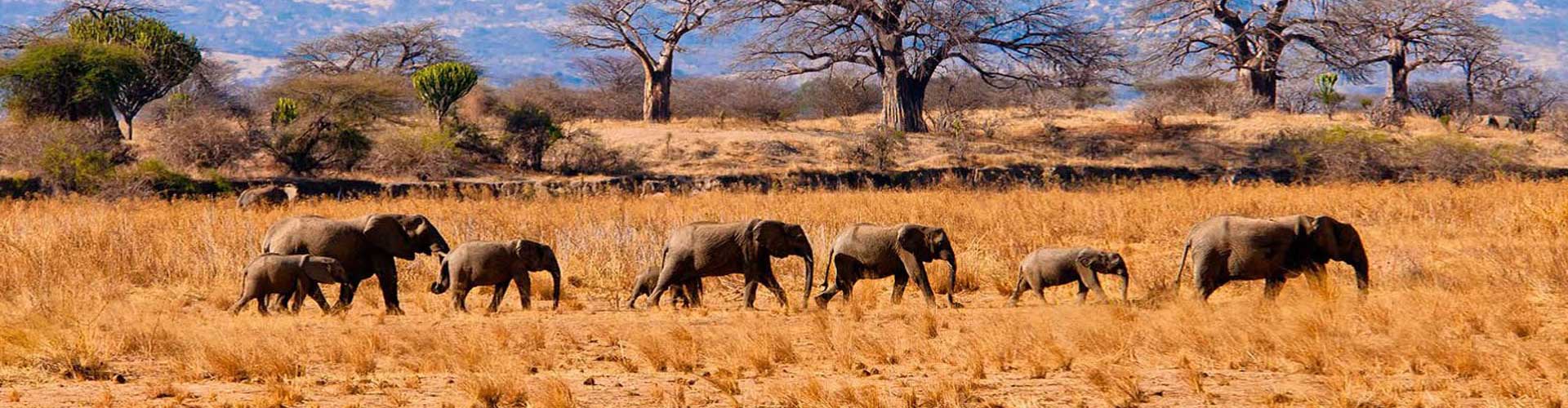
Several species of animals may be found in Nyerere National Park, including lions, wildebeests, giraffes, zebras, hippopotamuses, rhinos, antelopes, hyenas, African wild dogs, and a significant number of crocodiles in Tanzania’s largest river, the Rufiji River. The park’s most famous feature is its large population of African wild dogs. Selous Game Reserve, and by extension, Nyerere National Park, used to be home to a large number of elephants, but poaching has reduced their numbers. It is now hoped that converting part of the reserve to a national park will help control and minimize poaching, allowing the elephant population to return to its previous levels.
WHEN SHOULD YOU VISIT NYERERE NATIONAL PARK?
The best time to visit Nyerere National Park, like other famous Tanzania safaris like Ngorongoro, Serengeti, and Tarangire National Park, is during the dry season from July to October, when wildlife congregates near lakes, rivers, and swamps looking for water sources.
The “Green Season,” which runs from December to February during the rainy season, is also a beautiful time to visit since the countryside is lush and green. February is a fantastic month to watch new wild animal babies born, with birding at this time of year being world-class.
GETTING THERE/ ACCESSING THE NYERERE NATIONAL PARK
Road access to Nyerere National Park is available from all sections of Tanzania, including Dar es Salaam and Arusha. However, visiting Nyerere National Park by road is less expensive, but it will take longer because the park is located in a rural part of the country, so it could take 6 to 8 hours to get there. For international visitors, the best options are to fly to Julius Nyerere International Airport in Dar es Salaam or Kilimanjaro International Airport near Arusha Town, and then take a domestic aircraft to the park or drive to the park.
The park can also be reached by air, as it has several airstrips, the most notable of which are Mtemere, Matambwe, Sumbazi, Kiba, Beho Beho, and Siwandu airstrips. There are daily scheduled flights from Dar es Salaam, Zanzibar, or Arusha to a number of airstrips across the park, with a travel time of under an hour. Regional Air, Coastal Aviation, Safari Air Link, and Auric Air are just a few of the domestic/scheduled airlines that fly to nyerere national park. All of these airlines provide dependable service and have a proven track record of safety.
THE NATIONAL PARK ENTRANCE FEES AND OTHER COSTS
The cost of entre to Nyerere National Park is determined by the tourist’s residency status. There are three different types of park fees. Citizens, east Africa citizens and non-residents of East Africa. Citizens of East Africa are Tanzanians with valid national IDs or passports, as well as Kenyans, Ugandans, Rwandans, Burundians, and South Sudanese citizens with valid passports. Residents are people of any nationality who live in Tanzania and have legal documents from the Tanzanian government, whereas “non-residents” or “foreign tourists” are those who visit Tanzania but do not live there.
Non-residents must pay the entrance fees of USD 70 per adult over the age of 16 every 24 hours and USD 20 per child under the age of 5 to 15 years old to enter Nyerere National Park. (Note that this is during the peak/high season.)
The park entry fee for non-residents of Nyerere National Park is USD 60 per adult above the age of 16, per 24 hours, and USD 20 per child between the ages of 5 and 15. (Note that this is during the off-season/ low season.)
Apart from park entrance fees, there are also other fees such as concession fees, camping fees, tourism activity fees, and VAT. However, to get the entire cost and plan your visit to Nyerere National Park, it is best to contact the Focus East Africa tour company.
WHAT TO SEE IN NYERERE NATIONAL PARK/ TOURIST ATTRACTIONS
With a really huge wilderness area in East Africa, this national park has a pristine environment and can be considered more isolated, pristine, and un spoilt than Tanzania’s more popular parks like Serengeti, Ngorongoro, and Tarangire.
The Rufiji River, Tanzania’s largest river, flows into the Indian Ocean and is home to a healthy population of hippo and crocodiles. It runs through the park’s northern section and is one of the park’s main tourist attractions. The river is a recognized photographic zone and is particularly scenic.
Apart from the wildlife, the park’s distinctive vegetation is an outstanding draw in the park since you will be able to engage with this African wildness that has not been tainted in any way.
THINGS TO DO IN NYERERE NATIONAL PARK/ TOURIST ACTIVITIES
There are several exciting tourists activities one can appreciate in Nyerere National Park, and these includes the following
Boating
The River Boat Safari, which entails observing animals from the comfort of a boat on parts of Tanzania’s longest river, the Rufiji River, exploring channels, lagoons, and swamps, has to be the most thrilling tourist activity in Nyerere National Park. This one-of-a-kind experience is a great way to get to know the park. You will get the opportunity to witness water-loving species as well as creatures hunting for a water source to drink from along the river’s edge.
Cultural tours
Visiting a traditional village is another interesting experience in the nyerere national park. The village visit provides guests with an eye-opening cultural experience that provides insight into the special and unique way of life of the people who live in the park’s immediate vicinity. Visitors are allowed to connect with local people and learn about their traditional way of life, such as dancing styles or eating styles, during this great and thrilling tourist activity, and some of the most unforgettable memories are made during this activity.
Game drives
This is yet another tourist attraction in the Nyerere National Area, where visitors will have the opportunity to explore the park, see wild creatures, and engage with nature while riding in a safari vehicle. It’s one of the most popular activities among visitors since they may relax in the car while being driven from one region of the park to the next by a professional guide who will provide them with a factual and accurate interpretation of the park’s physical resources.
Morning game drives, late afternoon game drives, and night game drives are the three primary categories of game drives. Each has its own particular beauty, but night game drives allow you to observe the most night active animals that are not visible during day game drives. Many tourists to Nyerere National Park are interested in going on night game drives. Night drives are only permitted in the adjoining Selous Game Reserve and are not permitted inside the main Nyerere National Park.
Hot air balloon safari
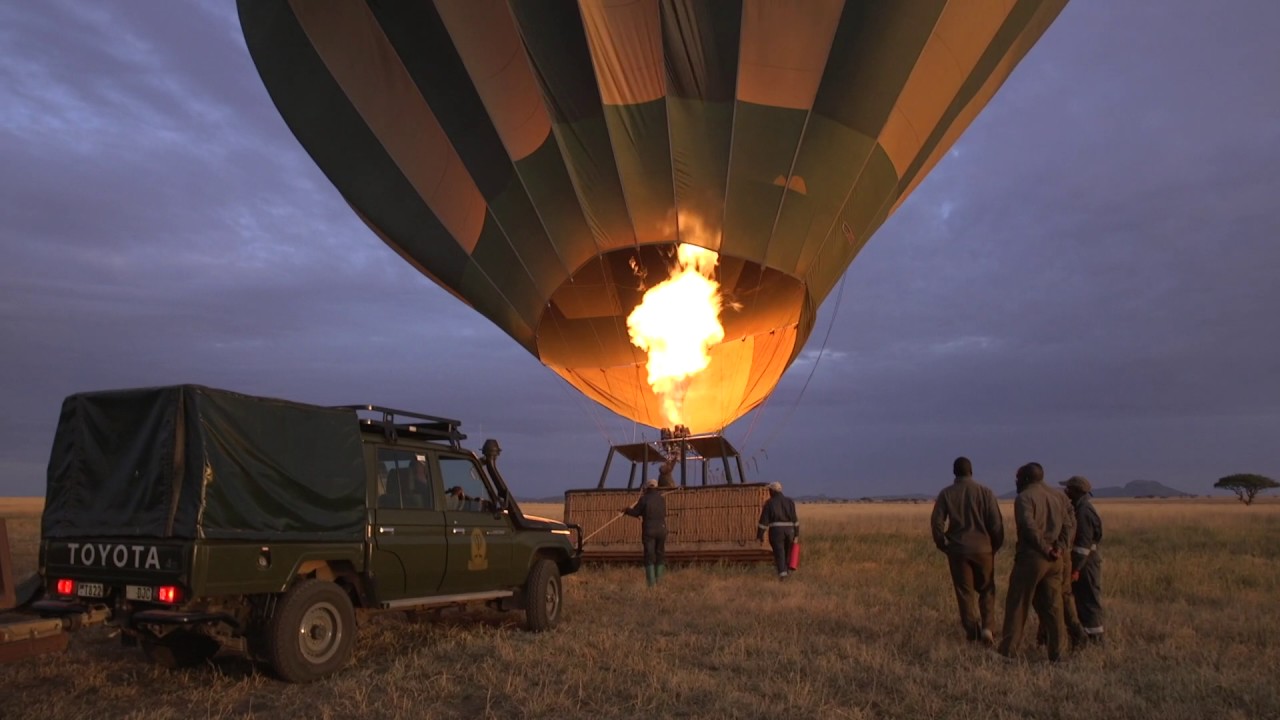
It is pricey, but well worth it, .Flying in a hot air balloon over the Nyerere National Park or the Selous Game Reserve is a truly “once in a lifetime” spectacular experience that every visitor should have because it is more than delightful. The hot air balloon safari gives you the opportunity to see animals in the park while soaring from one location to another. The balloons take off around 6 a.m., flying silently over the savannah grasslands below, where a variety of species may be seen. The flight lasts an hour and is followed by a “Champagne Bush Breakfast” at the wilderness balloon landing site.
Nature and bush walk
A bush walking safari is an exciting activity in which participants take leisurely, guided walks in a wildlife conservation area with the goal of seeing wild animals in their natural habitat without the use of a vehicle. Remember, you’re in the bush, surrounded by predators and other hazardous animals like lions, buffalo, and leopards. This is always accompanied by an armed game ranger to assure your safety.
Bush meals
This romantic bush lunch can be experienced in the center of the Nyerere National Park’s wildness, and it can be accompanied or followed by photography and filmmaking to make a memory of your safari with your partner. Some of the park’s lodges can arrange this for you, or you may ask your tour company (Focus East Africa tours) to do so because it is a unique activity.
WHERE TO STAY IN NYERERE NATIONAL PARK/ACCOMMODATIONS
Nyerere National Park features some fantastic hotels, particularly tented camps and lodges, scattered around the park. There are several tented camps within the park that provide a quality experience, including Serena Mivumo River Lodge, Sand Rivers, Selous Serena Camp, Beho Beho Camp, Mbuyu Safari Camp, Rufiji River Camp, and Stiegler’s Gorge Camp. However, the accommodations in Nyerere National Park are divided into three categories: budgeted accommodations, mid-range accommodations, and luxury accommodations.
Luxury tented camps and lodges/accommodations in Nyerere National Park
- Beho Beho camp
- Kiba point Selous
- Sand rivers Selous
- Siwandu camp
- Roho Ya Selous.
- The retreat Selous
Mid-range accommodation in Nyerere National Park
- Serena Mivumo river lodge
- Selous Serena camp.
- Selous impala camp
- Lake Manze camp
- Rufiji River camp
- Selous river camp
Budget accommodations in Nyerere National Park
- Sable Mountain lodge
- Selous kulinda camp
- Ol Moran camp