
Reopening of Tanzania’s borders
Reopening of Tanzania’s borders for entry into the country following the COVID 19 crisis has been a topic of discussion on different media platforms for some time and this has attracted both negative and positive media attention on a variety of the country’s sectors especially tourism which is a major contributor to the GDP of the country.
The reopening of Tanzania’s borders was announced by the president of the country His Excellency John Pombe Magufuli following a “significant reduction in the cases of the coronavirus”. This made Tanzania the first East African country to open its borders for entry and also tourism purposes.
Tanzania is a famous tourist destination with a variety of wildlife viewing destinations such as Serengeti national park, the Ngorongoro conservation area (known for the Ngorongoro crater), Tarangire national park and Lake Manyara national park among others. Other popular tourist destinations in Tanzania include Zanzibar and Mt Kilimanjaro.
Effects of the coronavirus in Tanzania;
The novel coronavirus affected many countries across the globe and this led to different countries locking down and closing their borders as a way to control the spread of the virus among their citizens which affected travel and tourism as a whole industry.
Over time, different countries gradually lifted the lockdown by putting some restrictions in place to be followed during the day to day activities and the new normal became sanitizing with an alcohol-based sanitizer, washing hands frequently with soap and water as well as social distancing as ways of avoiding the further spread of the virus.
Increased awareness of how to avoid contracting the virus was spread to the masses across media such as radios and televisions among others. Different frontline workers such as doctors and nurses are among the people who have played important roles in curbing the coronavirus.
Statistics of the COVID 19 cases were announced during the pandemic and the masses were alerted on the status of the pandemic in the country and were encouraged to work hand in hand with the Ministry Of Health to ensure that they stayed safe by following the guidelines given to them.
Tourism as well as many other sectors was affected by the COVID 19 pandemic and this led to many tourists postponing trips to the next year and some even cancelling their travel plans which drastically reduced earnings in the tourism industry.
Tour operators and other service providers were left in turmoil following the drastic effect of the travel restrictions and the lockdown of most countries affecting the tourism industry and leaving some people with no means of earning a living and others unemployed.
The reopening of the borders of Tanzania made way for new opportunities in the tourism sector since flights were made available for tourists to access the country therefore reviving the tourism industry as the neighboring East African countries still have their borders under lockdown.
Safety protocols and procedures;
Different safety protocols were put in place after the reopening of the country’s borders to be followed by the tourist service providers such as tour operators, airports, protected areas, accommodation facilities among others and these procedures include the following;
- Ensuring that updated COVID 19 precautionary measures are continuously observed and communicated accordingly with booking agencies. This will make it possible for the booking agencies to be well informed and update their clients on the precautionary measures when the country reopens.
- Reminding staff and tourists to adhere to best protective and preventive practices against COVID 19. When these practices are followed accordingly by both parties, tourism as an industry will be run without hindrances after the reopening of the country.
- Cleaning and sanitizing surfaces that are contacted with disinfectants on a regular basis. The reopening of the country will lead to tourism resuming within Tanzania and disinfecting surfaces that are contacted will curb the spread of the virus.
- Ensuring staff use protective gears when attending to guests and providing their services in guest servicing areas. Use of protective gear following the opening of the country’s borders and resuming of tourism activities will avoid contact and therefore spread of the virus.
- Providing hand washing and sanitizing facilities such as soap and sanitizers to both guests and staff. Use of these sanitizers will reduce the spread of the virus after the reopening of the borders of the country.
- Having a thermal screening in place at entrance points. This will ensure that people who have contracted the virus are dealt with accordingly before accessing the tourist facilities.
- Guest accommodation facilities must have in place a mechanism for assisting guests to reach a designated hospital as approved by Ministry Of Health. This will avoid further contact between the affected people and those who don’t have the virus after the reopening of the borders of Tanzania.
- Creation of a disposal mechanism for masks and other protective gears that comply with the recommended national health and safety standards and environmental considerations. This will promote environmental conservation at the tourist destinations following reopening of Tanzania’s borders.
- Provision of user friendly environment for person with disabilities.
Other general procedures to be followed in the country following the reopening of Tanzania include temperature checks, wearing of masks as well as social distancing were also put in place for safety purposes. These safety procedures are to be followed by the tourists who come into the country.
In relation to the flights into Tanzania, international flights were made available at the airport open to tourists from all countries. The travel requirements to be allowed access into the country still remain the same such as a visa and yellow fever vaccination.
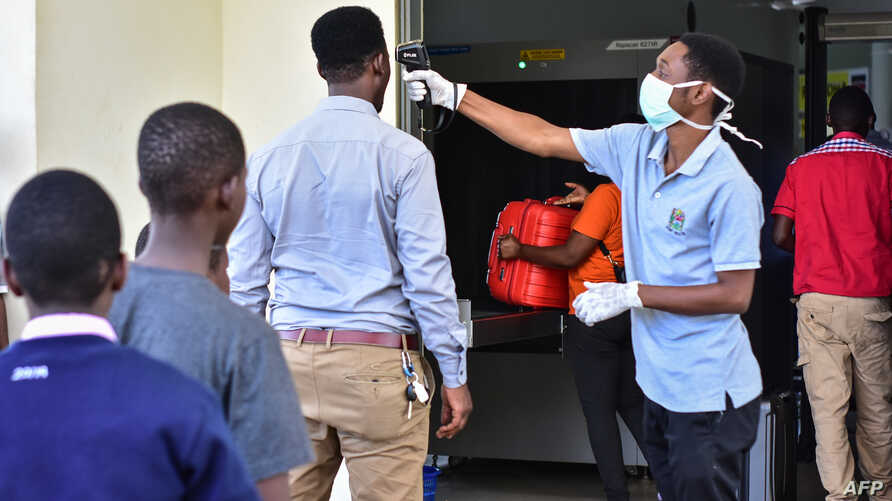
Some of the procedures to be followed at the airports in Tanzania include the following;
- Ensuring that all passengers and crews are screened for corona virus prior to boarding the flight.
- All airports are required to have equipment approved by the ministry of health to assess the physical condition of the passengers such as noncontact thermometers in all terminals.
- Placing disinfectant at the check in counters and waiting areas for the passengers to disinfect their hands and to ensure cleanliness of the check in areas.
- Providing information about preventive measures of the COVID 19 pandemic in visible places at the check in areas of the passengers.
- Frequently disinfecting the areas which are highly touched by passengers such as arm rests, seats, rails, wheel chairs, trolleys among others.
- Use of protective gear by staff working at security, check in, at the counter, boarding point, immigration, restaurants, shops, health care, ground cleaning among others.
- Practicing physical distancing as much as possible during check in, transfer and gate handling and this can be practiced in ways like using portable scanners for passengers to avoid handling of boarding cards. Other ways of physical distancing at the airport include marking signs indicating the congestion prone areas, arranging chairs in the waiting areas as per requirements of the ministry of health.
- The ventilation at the airport should be enhanced while observing local climate, terminal layout and structure of the airport in order to improve air circulation within the building.
- Security inspection in key areas such as document verification counters, baggage packing areas, baggage plates, and hand held metal detectors and security screening facilities should be regularly disinfected and hand sanitizers should be provided at screening isles.
In conclusion, the reopening of the borders of Tanzania for entry has greatly favored the growth of the tourism industry in the country which had been affected by the COVID 19 pandemic.